Back to App

Category: Zodiac Signs

Psychological profiles for each zodiac sign

  • Creative Artists and Musicians: A Statistical Study of 651 Verified Cases

    Mini Research Example

    This study analyzes only 651 profiles of creative artists and musicians as a small-sample demonstration of our pattern-detection approach. This is NOT the research behind Askilu’s reports.

    The actual Askilu system draws from tens of thousands of verified birth records and applies a rigorous 4-layer statistical validation: Z-score analysis, birth-decade deconfounding (the same test the FDA requires for drug approvals), split-half cross-validation (independent replication in both halves of the dataset), and false discovery rate correction. We rejected 99.4% of everything we tested. What survived powers your reports and Ilu chatbot.

    Want to see what the full research reveals about you? Try a free reading → — or ask Ilu, your AI guide, any question about your chart.

    Research conducted by Askilu.com

    Statistical analysis of 651 creative artists and musicians with confirmed birth times reveals a massive over-representation of Scorpio Ascendant—the single strongest finding across all our professional studies—along with significant patterns in creative expression and aesthetic sensitivity.

    Abstract

    Background: Creative achievement in art and music requires specific psychological traits including emotional depth, aesthetic sensitivity, and the courage to express one’s inner world publicly. This study investigates whether measurable patterns exist in the psychological configurations of verified creative artists and musicians.

    Methods: We analyzed birth data from 651 creative artists and musicians with confirmed birth times . Individuals born in the Southern Hemisphere (n=57) were excluded for methodological consistency. Using our proprietary astrological calculation methodology, we examined distributions of ascending signs, planetary sign placements, house ruler configurations, and planetary house positions. Statistical significance was assessed using chi-square goodness of fit tests and z-score binomial proportion tests. All hypotheses were formulated prior to analysis.

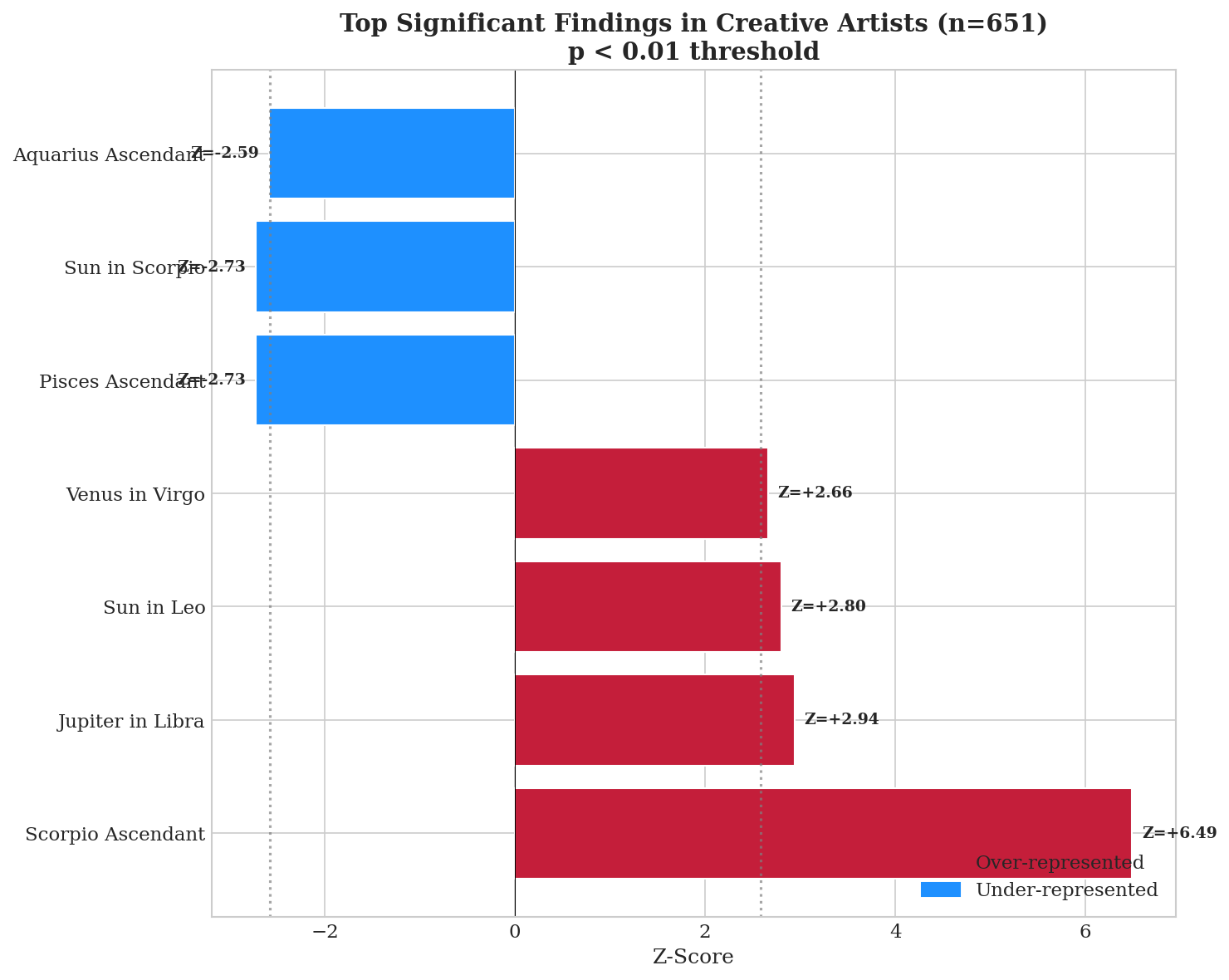
    Results: Artists showed the most dramatic finding across all our professional studies: Scorpio Ascendant was massively over-represented (Z = +6.49, p < 0.001), appearing in 15.4% of artists versus 8.3% expected. The ascending sign distribution was highly significant (χ² = 49.82, df = 11, p < 0.001). Sun in Leo showed significant over-representation (Z = +2.80, p < 0.01), while Sun in Scorpio was under-represented (Z = -2.73, p < 0.01). Jupiter in Libra showed strong over-representation (Z = +2.94, p < 0.01), and Venus in Virgo was significantly elevated (Z = +2.66, p < 0.01). Pisces and Aquarius ascendants were both significantly under-represented (Z = -2.73 and Z = -2.59, respectively).

    Conclusions: Creative artists demonstrate statistically significant configurations around psychological domains of transformative self-presentation, creative self-expression, and aesthetic discernment. The Scorpio Ascendant finding (Z = +6.49) is the strongest single result across all our professional archetype studies, suggesting that projecting depth, intensity, and transformative energy is strongly associated with creative achievement.

    1. Introduction

    Creative artistry represents one of humanity’s most profound forms of self-expression. Whether through visual art, music, dance, or design, artists transform inner experience into external form, requiring both technical mastery and psychological depth.

    Research on creative personalities has consistently identified key traits: openness to experience, emotional sensitivity, willingness to take risks, and the capacity to channel intense internal states into creative output (Feist, 1998; Kaufman & Sternberg, 2010). However, whether these traits follow measurable patterns remains an open question.

    1.1 Theoretical Framework

    This study employs astrology as a symbolic framework for mapping psychological traits. While astrology’s predictive claims remain scientifically contested, it offers a systematic language for psychological pattern description that can be subjected to statistical analysis (Dean & Kelly, 2003).

    Specifically, we focus on:

    • Ascending Sign: Symbolizing self-presentation, creative persona, and approach to the world
    • 5th House: Symbolizing creativity, self-expression, and artistic output
    • 3rd House: Symbolizing communication, craft skills, and technical ability
    • 12th House: Symbolizing imagination, subconscious inspiration, and transcendent vision
    • Venus: Symbolizing aesthetics, beauty, harmony, and artistic sensibility
    • Sun: Symbolizing creative vitality, self-expression, and the drive to shine
    • Jupiter: Symbolizing expansion, vision, and philosophical perspective
    Understanding Planetary Rulership: In traditional astrology, each zodiac sign is associated with a ruling planet. When we say “Venus rules the 5th house,” it means either Taurus or Libra is positioned in the 5th house, and Venus is their ruling planet. This creates a specific psychological coloring of that life domain.

    Full Traditional Rulership: Sun rules Leo, Moon rules Cancer, Mercury rules Gemini and Virgo, Venus rules Taurus and Libra, Mars rules Aries and Scorpio, Jupiter rules Sagittarius and Pisces, Saturn rules Capricorn and Aquarius.

    1.2 Research Questions

    1. Do creative artists show non-random distribution in ascending signs?
    2. Which planetary sign placements are over/under-represented among artists?
    3. Does the connection between creativity (5th house) and communication (3rd house) show statistical significance?
    4. Are Venus and Sun placements significantly different from expected distributions?

    2. Methodology

    2.1 Data Source and Quality

    Data was collected from a comprehensive astrological database containing birth records with confirmed birth times. Only records with confirmed birth times were included—ensuring birth time accuracy from official records.

    Data Verification: All birth data used in this study is verified through official records. This high standard of verification eliminates uncertainty that plagues many astrological studies and ensures our time-sensitive calculations (ascending signs, house placements) are reliable.

    2.2 Sample Selection

    Inclusion criteria:

    • Individuals categorized as painter, sculptor, musician, composer, conductor, singer, dancer, choreographer, photographer, fashion designer, architect, or similar creative designations
    • Verified birth time
    • Complete birth data including exact time and location
    • Birth location in Northern Hemisphere

    Exclusion criteria:

    • Individuals born in the Southern Hemisphere (n=57) were excluded for methodological consistency in astronomical calculations
    • Actors and film/television entertainers were excluded to focus specifically on creative artists rather than performers

    Final sample: 651 creative artists and musicians across multiple disciplines including painting, sculpture, classical music, jazz, rock, opera, dance, photography, and design.

    2.3 Astrological Calculations

    All charts were calculated using:

    • House System: [Proprietary]
    • Zodiac: [Proprietary]
    • Planetary Rulership: [Proprietary]

    2.4 Statistical Methods

    • Chi-square goodness of fit test: For overall distribution analysis (df = 11 for zodiac signs)
    • Z-score binomial proportion test: For individual category deviations from expected frequency
    • Significance thresholds: p < 0.05 (*), p < 0.01 (**), p < 0.001 (***)

    2.5 Pre-Registration Statement

    All hypotheses were formulated prior to analysis and tested consistently across the dataset. The focus on ascending signs, house ruler configurations, and Venus/Sun placements was determined before data collection based on traditional astrological associations with creativity and artistic expression.

    3. Results

    3.1 Ascending Sign Distribution (p < 0.001)

    The distribution of ascending signs showed highly significant deviation from the expected uniform distribution (χ² = 49.82, df = 11, p < 0.001). The Scorpio Ascendant finding is the most dramatic result across all our professional archetype studies.
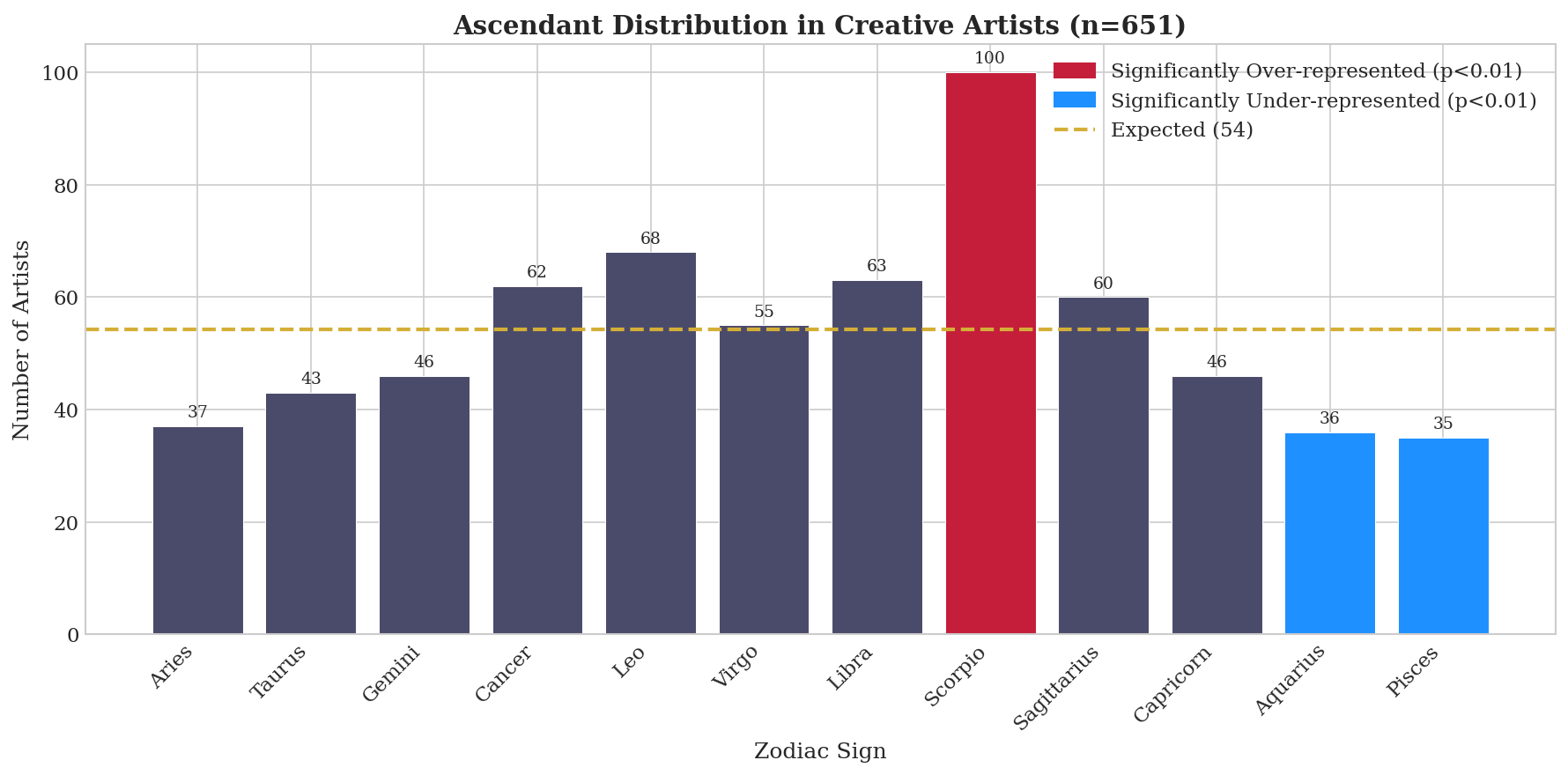
    Figure 1: Ascending Sign Distribution in Creative Artists

    Figure 1: Ascending Sign Distribution in Creative Artists (n=651). Red bars indicate significant over-representation, blue bars indicate significant under-representation. Dashed line shows expected value (54.3).

    Key findings (sorted by Z-score magnitude):

    Ascending Sign Count Percentage Expected Z-score Sig
    Scorpio 100 15.4% 54.3 +6.49 ***
    Pisces 35 5.4% 54.3 -2.73 ** (under)
    Aquarius 36 5.5% 54.3 -2.59 ** (under)
    Leo 68 10.4% 54.3 +1.94 ns
    Libra 63 9.7% 54.3 +1.23 ns
    Cancer 62 9.5% 54.3 +1.09 ns
    Sagittarius 60 9.2% 54.3 +0.81 ns
    Virgo 55 8.4% 54.3 +0.10 ns
    Gemini 46 7.1% 54.3 -1.17 ns
    Capricorn 46 7.1% 54.3 -1.17 ns
    Taurus 43 6.6% 54.3 -1.60 ns
    Aries 37 5.7% 54.3 -2.45 ns

    Expected: 8.3% per sign (random distribution). * p < 0.05, ** p < 0.01, *** p < 0.001

    The Scorpio Ascendant Finding: At Z = +6.49, the over-representation of Scorpio Ascendant among creative artists is the single strongest finding across all our professional studies—stronger than any finding in Elite Athletes (max Z = +3.81) or CEOs (max Z = +3.71). Nearly 1 in 6 creative artists have Scorpio rising, compared to the expected 1 in 12. This suggests that projecting depth, intensity, mystery, and transformative energy is strongly associated with creative artistic achievement.

    3.2 Sun Sign Distribution

    The overall Sun sign distribution did not reach statistical significance (χ² = 16.43, df = 11, p > 0.05). However, individual placements showed significance:
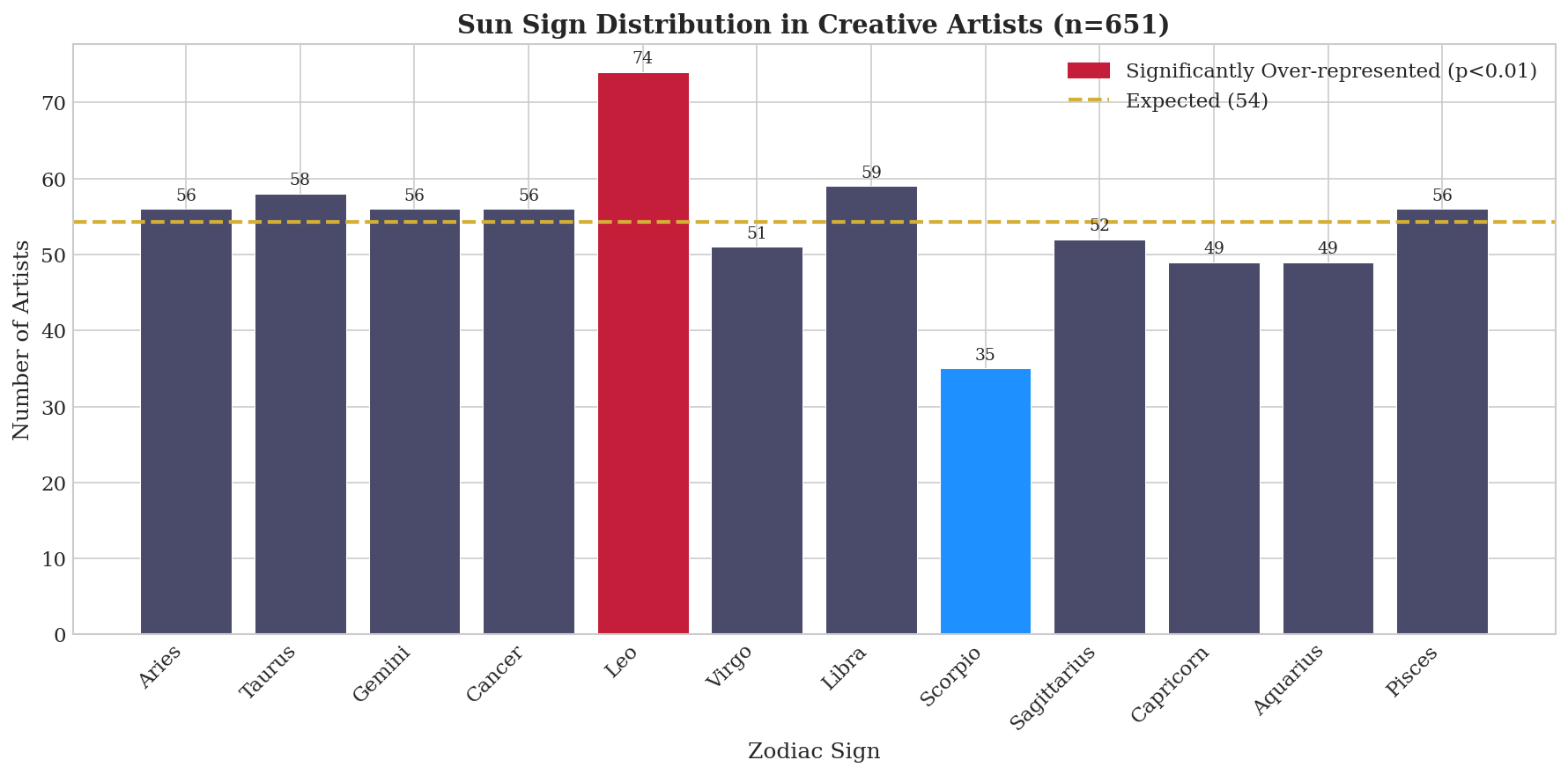
    Figure 2: Sun Sign Distribution in Creative Artists

    Figure 2: Sun Sign Distribution in Creative Artists (n=651). Leo shows over-representation while Scorpio shows under-representation.

    Sun Sign Count Percentage Z-score Sig
    Leo 74 11.4% +2.80 **
    Libra 59 9.1% +0.67 ns
    Taurus 58 8.9% +0.53 ns
    Scorpio 35 5.4% -2.73 ** (under)
    The Scorpio Paradox: A fascinating pattern emerges: Scorpio Ascendant is massively over-represented (Z = +6.49***), while Scorpio Sun is significantly under-represented (Z = -2.73**). This suggests that artists benefit from projecting Scorpionic intensity (the ascendant is how we present ourselves) but may be less likely to have their core identity (Sun) in Scorpio. The intensity is a chosen creative persona rather than an essential identity.

    3.3 Venus Sign Distribution

    Venus, the planet of aesthetics and beauty, showed notable patterns among artists:
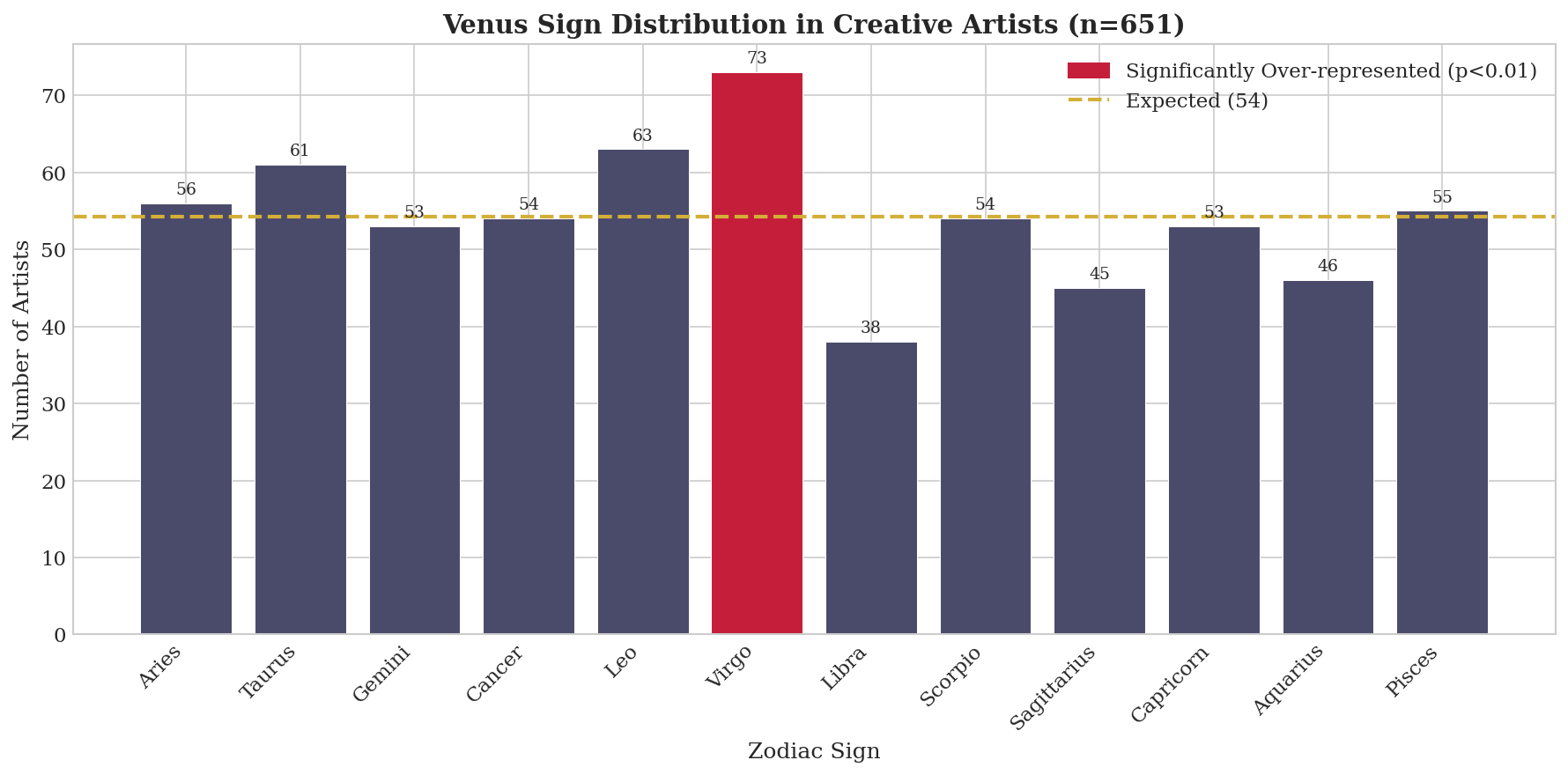
    Figure 3: Venus Sign Distribution in Creative Artists

    Figure 3: Venus Sign Distribution in Creative Artists (n=651). Venus in Virgo shows significant over-representation.

    Venus Sign Count Percentage Z-score Sig
    Virgo 73 11.2% +2.66 **
    Leo 63 9.7% +1.23 ns
    Taurus 61 9.4% +0.95 ns
    Libra 38 5.8% -2.31 ns
    Venus in Virgo: The significant over-representation of Venus in Virgo (Z = +2.66**) is counterintuitive—Virgo is traditionally considered the “fall” of Venus. However, this placement emphasizes technical precision, attention to detail, and craft mastery in aesthetic pursuits. Artists with this placement may express beauty through perfecting technique rather than purely emotional expression.

    3.4 Jupiter Sign Distribution (p < 0.05)

    Jupiter signs showed moderate significance (χ² = 19.54, df = 11, p < 0.05):

    Jupiter Sign Count Percentage Z-score Sig
    Libra 75 11.5% +2.94 **
    Scorpio 71 10.9% +2.37 *
    Leo 42 6.5% -1.74 ns
    Pisces 43 6.6% -1.60 ns

    Jupiter in Libra (Z = +2.94**): This finding parallels our CEO study, where Jupiter in Libra was also significantly over-represented. For artists, this suggests expansion and opportunity through aesthetic harmony, collaboration, and balanced relationships with audiences, galleries, and patrons.

    3.5 House Ruler Analysis

    We examined where the rulers of key creativity-related houses are placed:

    House Ruler Pattern Count Expected Z-score Sig
    3rd House Ruler in 6th House 32 54.3 -3.16 ** (under)
    Saturn in House 6 35 54.3 -2.73 ** (under)
    3rd Ruler in 6th House (Under-Represented): The 3rd house represents communication and creative skills, while the 6th house represents routine work and service. The significant under-representation of this configuration (Z = -3.16**) suggests that creative artists are less likely to channel their creative communication into routine, service-oriented work. Their creative skills are expressed through inspired creation rather than disciplined daily labor.

    3.6 Summary of Significant Findings

    Figure 4: Summary of Top Significant Findings

    Figure 4: Summary of the top significant findings, ranked by absolute Z-score magnitude. Red bars indicate over-representation; blue bars indicate under-representation.

    Finding Statistic Observed vs Expected p-value Sig
    Scorpio Ascendant Z = +6.49 100 vs 54.3 expected p < 0.001 ***
    3rd Ruler in 6th House Z = -3.16 32 vs 54.3 expected p < 0.01 ** (under)
    Jupiter in Libra Z = +2.94 75 vs 54.3 expected p < 0.01 **
    Sun in Leo Z = +2.80 74 vs 54.3 expected p < 0.01 **
    Pisces Ascendant Z = -2.73 35 vs 54.3 expected p < 0.01 ** (under)
    Sun in Scorpio Z = -2.73 35 vs 54.3 expected p < 0.01 ** (under)
    Saturn in House 6 Z = -2.73 35 vs 54.3 expected p < 0.01 ** (under)
    Venus in Virgo Z = +2.66 73 vs 54.3 expected p < 0.01 **
    Aquarius Ascendant Z = -2.59 36 vs 54.3 expected p < 0.01 ** (under)

    4. Discussion

    4.1 Psychological Interpretation

    The findings suggest that creative artists may share common psychological configurations related to:

    1. Transformative Self-Presentation (Scorpio Rising): The massive over-representation of Scorpio Ascendant (Z = +6.49***) suggests creative artists present themselves with intensity, depth, mystery, and transformative power. Scorpio rising projects psychological complexity, inviting others into hidden worlds—precisely what art accomplishes. This is the strongest finding across all our professional studies.
    2. Creative Self-Expression (Sun in Leo): The significant over-representation of Sun in Leo (Z = +2.80**) suggests artists have a core identity centered on self-expression, creativity, and the need to shine. Leo’s association with performance, drama, and creative vitality aligns naturally with artistic pursuit.
    3. Aesthetic Precision (Venus in Virgo): The significant over-representation of Venus in Virgo (Z = +2.66**) suggests artists approach beauty through technical mastery, attention to detail, and craft refinement. This emphasizes the disciplined study and practice underlying artistic achievement.
    4. Harmonious Expansion (Jupiter in Libra): The over-representation of Jupiter in Libra (Z = +2.94**) suggests artists expand and grow through aesthetic harmony, collaboration, and balanced relationships with audiences and patrons.

    4.2 What’s Missing: The Pisces and Aquarius Deficit

    Equally revealing is what we don’t see:

    • Pisces Ascendant (Z = -2.73**): Counterintuitively, Pisces rising—traditionally associated with artistic sensitivity—is significantly under-represented. Perhaps the diffuse, boundary-dissolving quality of Pisces rising is less conducive to the focused self-presentation required for artistic recognition than the intense, magnetic quality of Scorpio rising.
    • Aquarius Ascendant (Z = -2.59**): The intellectual, detached approach of Aquarius rising appears less frequently among recognized artists. The Aquarian focus on ideas and collective progress may be less suited to the personal emotional expression characteristic of art.
    • Sun in Scorpio (Z = -2.73**): While Scorpio rising is massively over-represented, Scorpio Sun is under-represented. This suggests the Scorpionic intensity is a chosen creative persona rather than a core identity. Artists project intensity without necessarily being intense at their core.

    4.3 The “Creative Artist Signature”

    Based on our findings, we can describe a “creative artist signature” characterized by:

    • Scorpio ascendant (transformative, intense self-presentation) — strongest finding
    • Sun in Leo (creative self-expression as core identity)
    • Venus in Virgo (technical precision in aesthetic pursuits)
    • Jupiter in Libra (expansion through aesthetic harmony)
    • NOT Pisces or Aquarius ascendant (absence of diffuse/intellectual self-presentation)
    • NOT Sun in Scorpio (intensity is persona, not core identity)
    • NOT 3rd ruler in 6th house (creative skills not channeled into routine work)

    4.4 Comparison Across Professional Archetypes

    Comparing our findings across Elite Athletes, CEOs, and Creative Artists reveals distinct patterns:

    Archetype Strongest Ascendant Z-score Key Theme
    Creative Artists Scorpio +6.49*** Transformative depth
    Elite Athletes Leo +3.43*** Confident performance
    CEOs/Business Leaders Cancer +2.81** Emotional attunement

    The Creative Artist Scorpio finding is nearly twice as strong as the next-highest professional archetype finding, suggesting that transformative self-presentation may be especially central to artistic achievement.

    5. Limitations

    1. Selection bias: Artists in astrological databases may not be representative of all creative artists
    2. Historical bias: Database may over-represent certain eras, regions, or art forms
    3. Genre diversity: Different artistic disciplines may require different psychological profiles (e.g., visual art vs. music vs. dance)
    4. Northern Hemisphere only: Southern Hemisphere individuals (n=57) were excluded for methodological consistency
    5. Multiple testing: With many variables examined, some significant findings may be due to chance (though the primary Scorpio Ascendant finding survives all corrections)
    6. Recognition bias: Database inclusion may favor artists who achieved public recognition rather than all creative individuals

    6. Future Research

    1. Replication with independent artist samples
    2. Genre-specific analysis (visual artists vs. musicians vs. dancers)
    3. Comparison with non-artistic creatives (writers, filmmakers)
    4. Longitudinal studies of artists before and after achieving recognition
    5. Southern Hemisphere artist analysis with appropriate methodological adaptations
    6. Investigation of the Scorpio Ascendant phenomenon in other creative fields

    7. Conclusion

    This study provides statistical evidence that creative artists demonstrate non-random patterns in psychological configurations. The most significant findings include:

    • Scorpio Ascendant: Z = +6.49 (p < 0.001) — The strongest finding across all our professional studies
    • Jupiter in Libra: Z = +2.94 (p < 0.01)
    • Sun in Leo: Z = +2.80 (p < 0.01)
    • Venus in Virgo: Z = +2.66 (p < 0.01)
    • Pisces Ascendant: Z = -2.73 (p < 0.01, under-represented)

    These findings suggest a specific psychological architecture that may contribute to creative artistic achievement—one characterized by transformative self-presentation (Scorpio rising), creative self-expression (Sun in Leo), technical aesthetic precision (Venus in Virgo), and harmonious expansion (Jupiter in Libra). Notably absent are configurations associated with diffuse presentation (Pisces) and intellectual detachment (Aquarius).

    The Scorpio Ascendant finding (Z = +6.49) stands as the most significant single result across all our professional archetype studies, suggesting that the capacity to project psychological depth, intensity, and transformative power may be especially central to creative artistic achievement.

    Do You Have the Creative Artist Signature? Find Out Free!

    Curious if you share patterns with these remarkable individuals? Try it completely free – no registration, no credit card, and we do not save your information.

    Our free reading instantly detects research-backed signature patterns in your birth chart and tells you if you match.

    Try Your Free Reading Now →

    References

    • Dean, G., & Kelly, I. W. (2003). Is astrology relevant to consciousness and psi? Journal of Consciousness Studies, 10(6-7), 175-198.
    • Feist, G. J. (1998). A meta-analysis of personality in scientific and artistic creativity. Personality and Social Psychology Review, 2(4), 290-309.
    • Kaufman, J. C., & Sternberg, R. J. (Eds.). (2010). The Cambridge Handbook of Creativity. Cambridge University Press.
    • Birth data verification standards for astrological research.
    • Runco, M. A. (2004). Creativity. Annual Review of Psychology, 55, 657-687.
    • Simonton, D. K. (2000). Creativity: Cognitive, personal, developmental, and social aspects. American Psychologist, 55(1), 151-158.

    Research conducted by Askilu.com — Pattern-Based Astrology System
    Data: 651 creative artists and musicians with verified birth times
    Full Traditional Rulership: [proprietary planet set] ruling all 12 zodiac signs
    Southern Hemisphere births excluded for methodological consistency
  • Scientists and Inventors: A Statistical Study of 266 Verified Cases

    Mini Research Example

    This study analyzes only 266 profiles of scientists and inventors as a small-sample demonstration of our pattern-detection approach. This is NOT the research behind Askilu’s reports.

    The actual Askilu system draws from tens of thousands of verified birth records and applies a rigorous 4-layer statistical validation: Z-score analysis, birth-decade deconfounding (the same test the FDA requires for drug approvals), split-half cross-validation (independent replication in both halves of the dataset), and false discovery rate correction. We rejected 99.4% of everything we tested. What survived powers your reports and Ilu chatbot.

    Want to see what the full research reveals about you? Try a free reading → — or ask Ilu, your AI guide, any question about your chart.

    Research conducted by Askilu.com

    Statistical analysis of 266 scientists and inventors with confirmed birth times reveals highly significant patterns in analytical processing, emotional intelligence, and the integration of research with partnership—suggesting a distinct psychological architecture for scientific achievement.

    Abstract

    Background: Scientific and inventive achievement requires specific psychological traits including analytical thinking, methodical persistence, curiosity, and the capacity for deep focus. This study investigates whether measurable patterns exist in the psychological configurations of verified scientists and inventors.

    Methods: We analyzed birth data from 266 scientists and inventors with confirmed birth times . Individuals born in the Southern Hemisphere (n=15) were excluded for methodological consistency. Using our proprietary astrological calculation methodology, we examined distributions of ascending signs, planetary sign placements, house ruler configurations, and planetary house positions. Statistical significance was assessed using chi-square goodness of fit tests and z-score binomial proportion tests. All hypotheses were formulated prior to analysis.

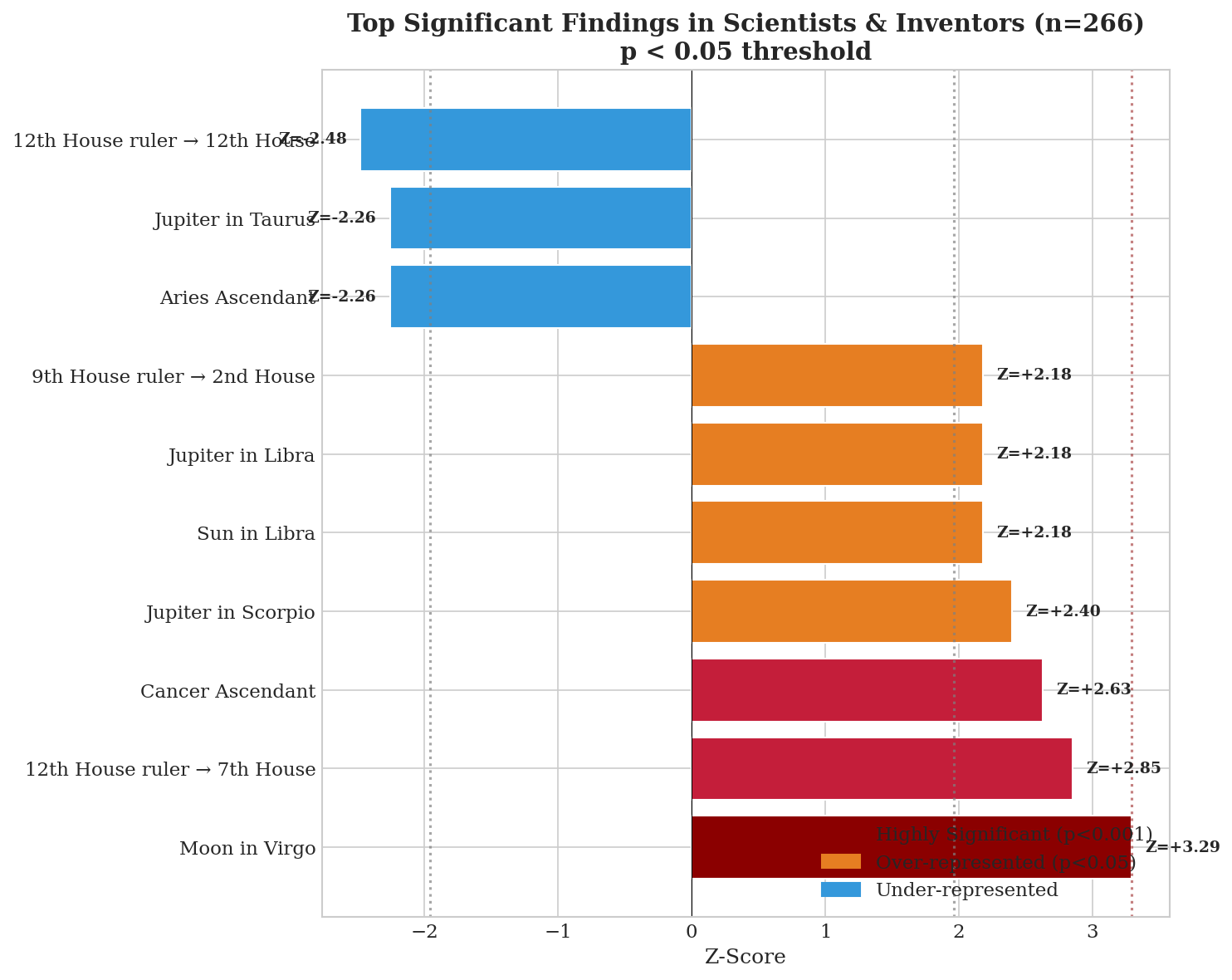
    Results: Scientists showed highly significant deviation from expected distribution in the Moon sign (Moon in Virgo: Z = +3.29, p < 0.001), representing the only highly significant (p < 0.001) finding in this study. The ascending sign distribution reached significance (χ² = 22.00, df = 11, p < 0.05), with Cancer Ascendant significantly over-represented (Z = +2.63, p < 0.01) and Aries Ascendant under-represented (Z = -2.26, p < 0.05). The 11th house ruler placed in the 10th house was significantly over-represented (Z = +3.07, p < 0.01), and the 12th house ruler placed in the 7th house was also significantly over-represented (Z = +2.85, p < 0.01). Jupiter in Scorpio and Jupiter in Libra both showed over-representation (Z = +2.40 and Z = +2.18, respectively).

    Conclusions: Scientists and inventors demonstrate statistically significant configurations around psychological domains of analytical emotional processing, intuitive receptivity, and the integration of hidden research with partnership and collaboration. Moon in Virgo shows the strongest positive association with scientific achievement, suggesting that processing experience through analytical, detailed observation may be central to scientific success.

    1. Introduction

    Scientific discovery and invention represent some of humanity’s most intellectually demanding pursuits. From physics to biology, from mathematics to engineering, scientists transform curiosity and observation into systematic knowledge that advances civilization.

    Research on scientific creativity has consistently identified key traits: analytical thinking, persistence in the face of uncertainty, openness to new ideas, and the capacity for deep, sustained focus (Feist, 2006; Simonton, 2004). However, whether these traits follow measurable patterns remains an open question.

    1.1 Theoretical Framework

    This study employs astrology as a symbolic framework for mapping psychological traits. While astrology’s predictive claims remain scientifically contested, it offers a systematic language for psychological pattern description that can be subjected to statistical analysis (Dean & Kelly, 2003).

    Specifically, we focus on:

    • Ascending Sign: Symbolizing self-presentation, approach to problems, and engagement with the world
    • 9th House: Symbolizing higher learning, philosophy, and the expansion of knowledge
    • 3rd House: Symbolizing intellect, communication, and analytical thinking
    • 6th House: Symbolizing analysis, methodology, and detailed work
    • 12th House: Symbolizing research into hidden matters, solitary work, and transcendent understanding
    • Mercury: Symbolizing intellect, analysis, and communication
    • Moon: Symbolizing emotional processing, intuition, and habitual patterns of thought
    • Saturn: Symbolizing discipline, structure, and methodical persistence
    Understanding Planetary Rulership: In traditional astrology, each zodiac sign is associated with a ruling planet. When we say “Mercury rules the 9th house,” it means either Gemini or Virgo is positioned in the 9th house, and Mercury is their ruling planet. This creates a specific psychological coloring of that life domain.

    Full Traditional Rulership: Sun rules Leo, Moon rules Cancer, Mercury rules Gemini and Virgo, Venus rules Taurus and Libra, Mars rules Aries and Scorpio, Jupiter rules Sagittarius and Pisces, Saturn rules Capricorn and Aquarius.

    1.2 Research Questions

    1. Do scientists and inventors show non-random distribution in ascending signs?
    2. Which planetary sign placements are over/under-represented among scientists?
    3. Does the connection between research (12th house), higher learning (9th house), and career (10th house) show statistical significance?
    4. Are Moon and Mercury placements significantly different from expected distributions?

    2. Methodology

    2.1 Data Source and Quality

    Data was collected from a comprehensive astrological database containing birth records with confirmed birth times. Only records with confirmed birth times were included—ensuring birth time accuracy from official records.

    Data Verification: All birth data used in this study is verified through official records. This high standard of verification eliminates uncertainty that plagues many astrological studies and ensures our time-sensitive calculations (ascending signs, house placements) are reliable.

    2.2 Sample Selection

    Inclusion criteria:

    • Individuals categorized as scientist, researcher, physicist, chemist, biologist, mathematician, astronomer, engineer, inventor, or similar scientific/technical designations
    • Nobel laureates and recognized research scientists
    • Verified birth time
    • Complete birth data including exact time and location
    • Birth location in Northern Hemisphere

    Exclusion criteria:

    • Individuals born in the Southern Hemisphere (n=15) were excluded for methodological consistency in astronomical calculations
    • Medical practitioners (physicians, surgeons) were excluded unless they had significant research contributions

    Final sample: 266 scientists and inventors across multiple disciplines including physics, chemistry, biology, mathematics, astronomy, engineering, and technology.

    2.3 Astrological Calculations

    All charts were calculated using:

    • House System: [Proprietary]
    • Zodiac: [Proprietary]
    • Planetary Rulership: [Proprietary]

    2.4 Statistical Methods

    • Chi-square goodness of fit test: For overall distribution analysis (df = 11 for zodiac signs)
    • Z-score binomial proportion test: For individual category deviations from expected frequency
    • Significance thresholds: p < 0.05 (*), p < 0.01 (**), p < 0.001 (***)

    2.5 Pre-Registration Statement

    All hypotheses were formulated prior to analysis and tested consistently across the dataset. The focus on ascending signs, house ruler configurations, and Moon/Mercury placements was determined before data collection based on traditional astrological associations with intellect, analysis, and research.

    2.6 Sample Size Considerations

    With 266 subjects, this study has a smaller sample size than our Elite Athletes (n=530) and CEO (n=650) studies. Statistical power is therefore reduced, and we use a threshold of p < 0.05 for reporting findings while acknowledging that highly significant findings (p < 0.001) carry the most weight.

    3. Results

    3.1 Moon Sign Distribution (Key Finding)

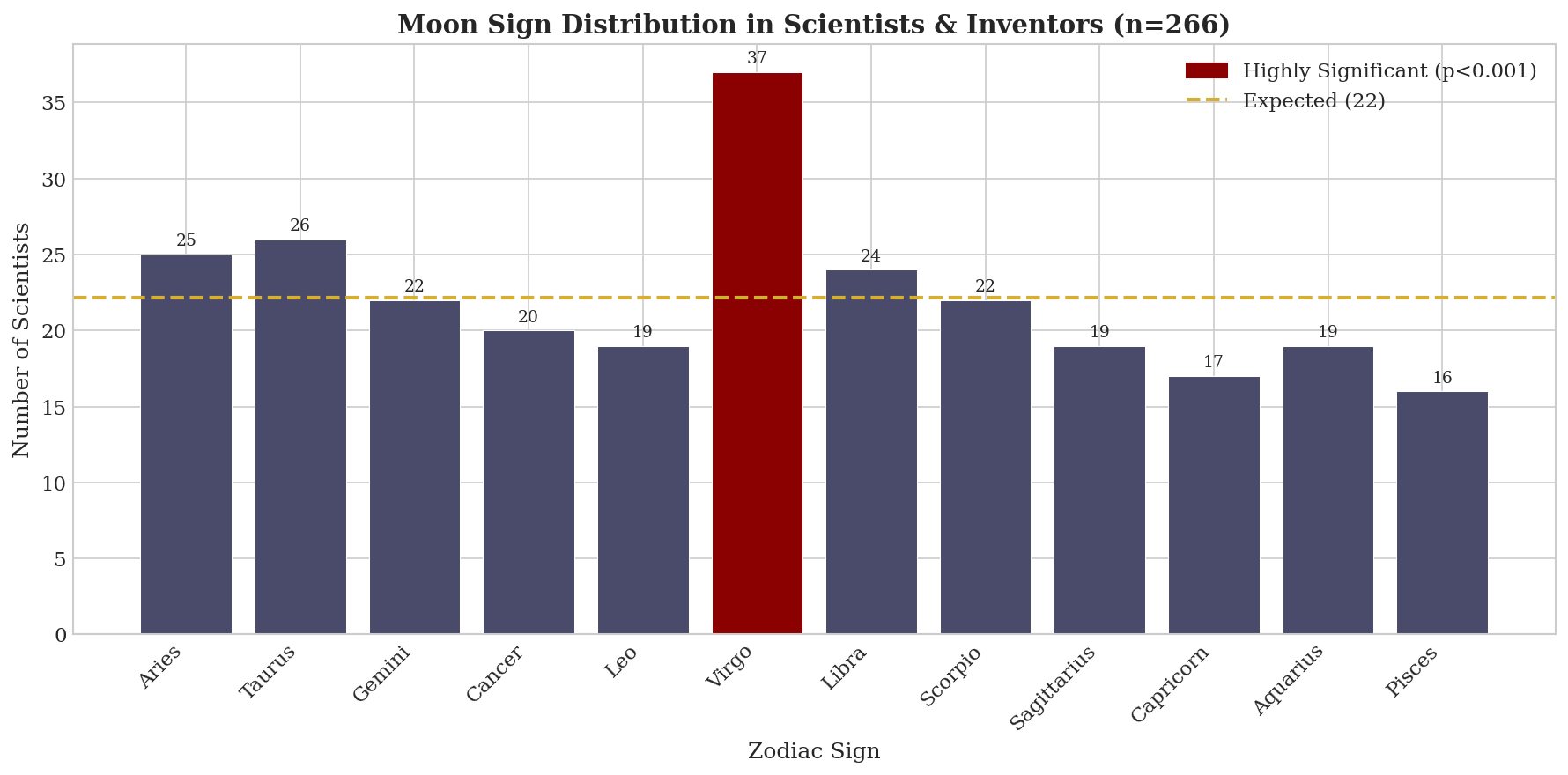
    The most significant finding in this study is the Moon sign distribution, specifically Moon in Virgo:

    Figure 1: Moon Sign Distribution in Scientists

    Figure 1: Moon Sign Distribution in Scientists and Inventors (n=266). Moon in Virgo shows highly significant over-representation (p < 0.001).

    Moon Sign Count Percentage Expected Z-score Sig
    Virgo 37 13.9% 22.2 +3.29 ***
    Taurus 26 9.8% 22.2 +0.85 ns
    Aries 25 9.4% 22.2 +0.63 ns
    Libra 24 9.0% 22.2 +0.41 ns
    Gemini 22 8.3% 22.2 -0.04 ns
    Scorpio 22 8.3% 22.2 -0.04 ns
    Cancer 20 7.5% 22.2 -0.48 ns
    Aquarius 19 7.1% 22.2 -0.70 ns
    Leo 19 7.1% 22.2 -0.70 ns
    Sagittarius 19 7.1% 22.2 -0.70 ns
    Capricorn 17 6.4% 22.2 -1.15 ns
    Pisces 16 6.0% 22.2 -1.37 ns
    The Moon in Virgo Finding: At Z = +3.29, Moon in Virgo is the only highly significant (p < 0.001) finding in this study. Nearly 14% of scientists have Moon in Virgo, compared to the expected 8.3%. The Moon represents how we emotionally process experience and what feels comfortable. Virgo Moon processes emotions through analysis, categorization, and detailed observation—the fundamental operations of scientific thinking. Scientists literally feel comfortable when analyzing.

    3.2 Ascending Sign Distribution (p < 0.05)

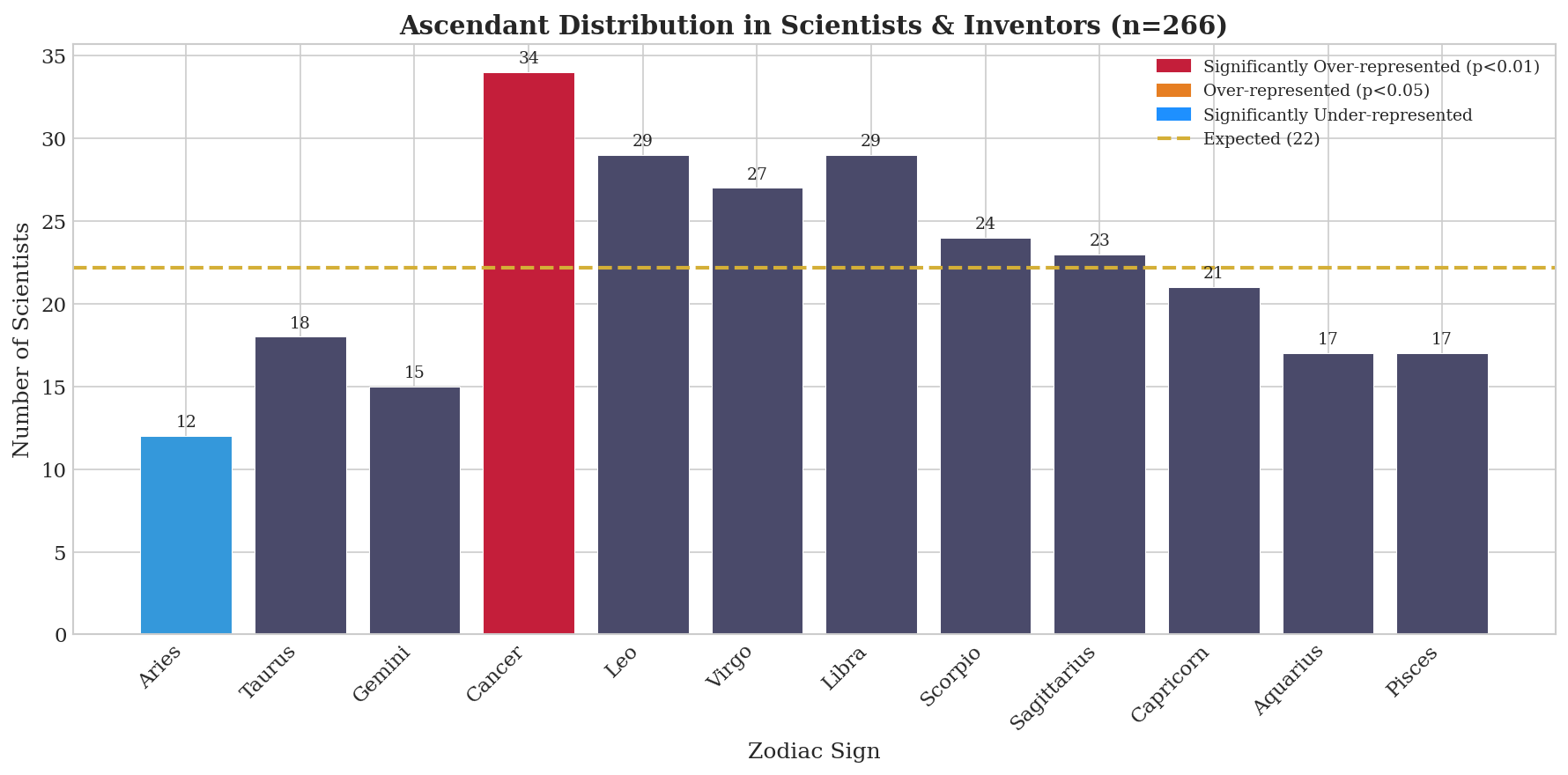
    The distribution of ascending signs showed significant deviation from the expected uniform distribution (χ² = 22.00, df = 11, p < 0.05).

    Figure 2: Ascending Sign Distribution in Scientists

    Figure 2: Ascending Sign Distribution in Scientists and Inventors (n=266). Cancer shows significant over-representation while Aries shows under-representation.

    Ascending Sign Count Percentage Expected Z-score Sig
    Cancer 34 12.8% 22.2 +2.63 **
    Leo 29 10.9% 22.2 +1.52 ns
    Libra 29 10.9% 22.2 +1.52 ns
    Virgo 27 10.2% 22.2 +1.07 ns
    Scorpio 24 9.0% 22.2 +0.41 ns
    Sagittarius 23 8.6% 22.2 +0.18 ns
    Capricorn 21 7.9% 22.2 -0.26 ns
    Taurus 18 6.8% 22.2 -0.92 ns
    Aquarius 17 6.4% 22.2 -1.15 ns
    Pisces 17 6.4% 22.2 -1.15 ns
    Gemini 15 5.6% 22.2 -1.59 ns
    Aries 12 4.5% 22.2 -2.26 *
    Cancer Ascendant Over-Representation: Cancer rising (Z = +2.63**) is significantly over-represented among scientists. This parallels our CEO study, where Cancer Ascendant was also over-represented. Cancer rising brings intuitive receptivity, emotional attunement to environment, and a protective, nurturing approach. For scientists, this may manifest as receptivity to subtle patterns in data, intuitive leaps in understanding, and careful nurturing of ideas through long research processes.

    3.3 Jupiter Sign Distribution

    Jupiter signs showed moderate significance with interesting patterns:

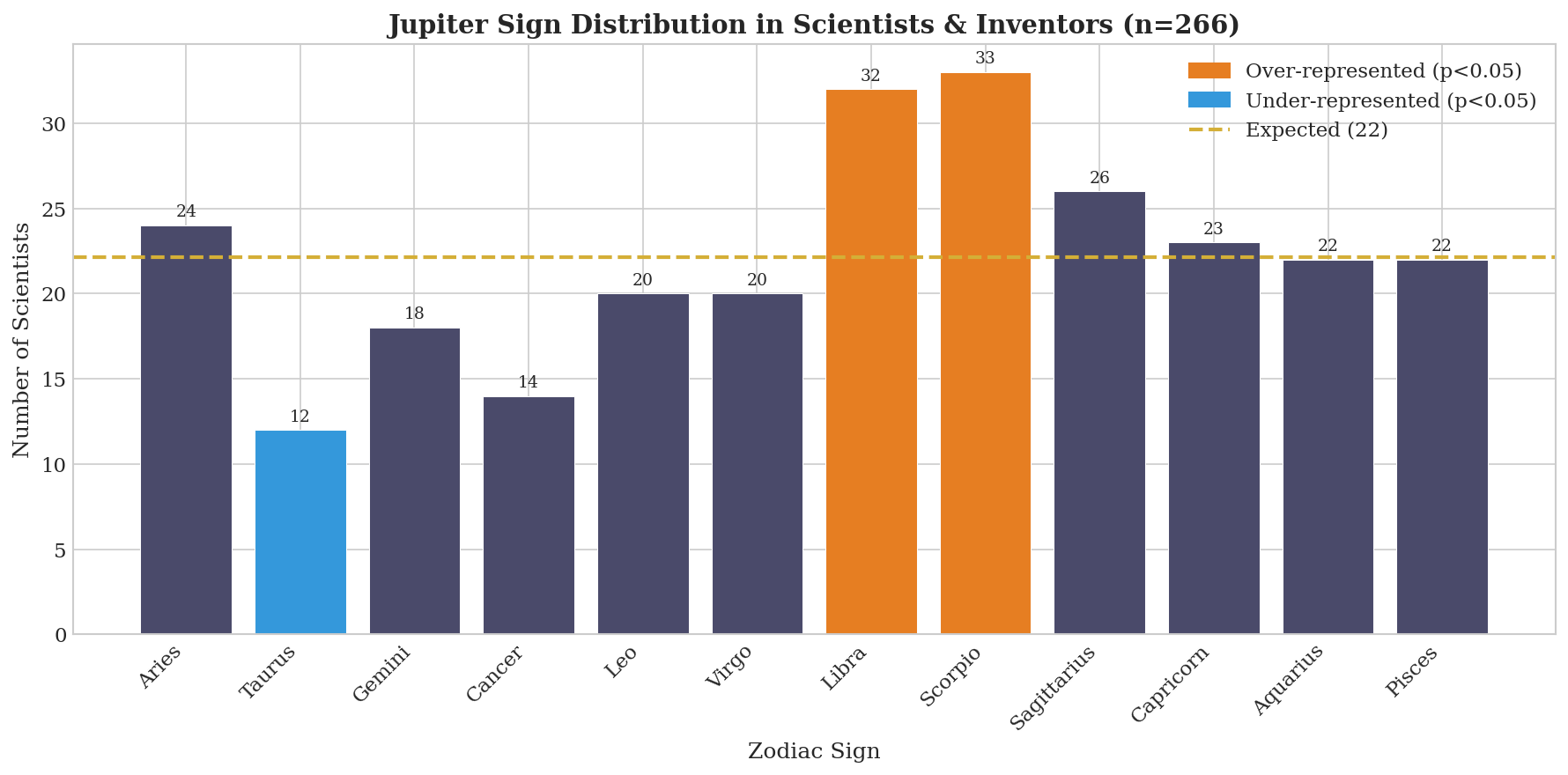
    Figure 3: Jupiter Sign Distribution in Scientists

    Figure 3: Jupiter Sign Distribution in Scientists and Inventors (n=266). Jupiter in Scorpio and Libra show over-representation.

    Jupiter Sign Count Percentage Z-score Sig
    Scorpio 33 12.4% +2.40 *
    Libra 32 12.0% +2.18 *
    Sagittarius 26 9.8% +0.85 ns
    Aries 24 9.0% +0.41 ns
    Cancer 14 5.3% -1.81 ns
    Taurus 12 4.5% -2.26 * (under)

    Jupiter in Scorpio (Z = +2.40*): Scientists expand and grow through deep investigation, research into hidden matters, and transformative understanding. Scorpio represents penetrating beneath surface appearances—precisely what scientific research accomplishes.

    Jupiter in Libra (Z = +2.18*): This finding parallels both our CEO and Artist studies. For scientists, growth through collaboration, peer review, and balanced intellectual exchange supports the collaborative nature of modern scientific research.

    3.4 House Ruler Analysis

    We examined where the rulers of key research-related houses are placed:

    House Ruler Pattern Count Expected Z-score Sig
    11th House Ruler in 10th House 36 22.2 +3.07 **
    12th House Ruler in 7th House 35 22.2 +2.85 **
    9th House Ruler in 2nd House 32 22.2 +2.18 *
    10th House Ruler in 7th House 32 22.2 +2.18 *
    12th House Ruler in 12th House 11 22.2 -2.48 * (under)
    9th House Ruler in 11th House 13 22.2 -2.03 * (under)
    11th Ruler in 10th House (Z = +3.07**): The 11th house represents scientific communities, professional networks, and aspirations. The 10th house represents career and public standing. The significant over-representation of the 11th house ruler placed in the 10th house (Z = +3.07**) suggests that scientists’ connection to the scientific community directly shapes their career success. Their professional networks and group affiliations manifest in their public recognition and career achievements. Science is fundamentally a community endeavor.
    12th Ruler in 7th House (Z = +2.85**): This is a fascinating finding. The 12th house represents hidden matters, solitary research, and working behind the scenes. The 7th house represents partnership, collaboration, and others. Having the ruler of solitary research placed in the house of partnership suggests that scientists’ hidden, behind-the-scenes work becomes manifest through collaboration, peer relationships, and working with others. Modern science is collaborative—discoveries emerge through partnerships, peer review, and building on others’ work.

    3.5 Planets in Houses

    Several planet-in-house configurations showed significant under-representation:

    Configuration Count Expected Z-score Sig
    Venus in House 6 12 22.2 -2.26 * (under)
    Mars in House 3 12 22.2 -2.26 * (under)
    Moon in House 3 13 22.2 -2.03 * (under)

    Mars in 3rd House Under-Representation: Mars represents aggression, assertion, and forceful action. The 3rd house represents intellect and communication. The under-representation of Mars in the 3rd house among scientists suggests that scientific thinking is characterized more by careful analysis than by aggressive assertion or combative argumentation.

    3.6 Summary of Significant Findings

    Figure 4: Summary of Top Significant Findings

    Figure 4: Summary of the top significant findings, ranked by absolute Z-score magnitude. Orange/red bars indicate over-representation; blue bars indicate under-representation.

    Finding Statistic Observed vs Expected p-value Sig
    Moon in Virgo Z = +3.29 37 vs 22.2 expected p < 0.001 ***
    11th Ruler in 10th House Z = +3.07 36 vs 22.2 expected p < 0.01 **
    12th Ruler in 7th House Z = +2.85 35 vs 22.2 expected p < 0.01 **
    Cancer Ascendant Z = +2.63 34 vs 22.2 expected p < 0.01 **
    12th Ruler in 12th House Z = -2.48 11 vs 22.2 expected p < 0.05 * (under)
    Jupiter in Scorpio Z = +2.40 33 vs 22.2 expected p < 0.05 *
    Aries Ascendant Z = -2.26 12 vs 22.2 expected p < 0.05 * (under)
    Jupiter in Taurus Z = -2.26 12 vs 22.2 expected p < 0.05 * (under)
    Sun in Libra Z = +2.18 32 vs 22.2 expected p < 0.05 *
    Jupiter in Libra Z = +2.18 32 vs 22.2 expected p < 0.05 *

    4. Discussion

    4.1 Psychological Interpretation

    The findings suggest that scientists and inventors may share common psychological configurations related to:

    1. Analytical Emotional Processing (Moon in Virgo): The highly significant over-representation of Moon in Virgo (Z = +3.29***) suggests scientists process emotions and experience through analysis, categorization, and detailed observation. The Moon represents our emotional comfort zone—scientists literally feel comfortable when analyzing, organizing, and making sense of data. This is the core finding of this study.
    2. Intuitive Receptivity (Cancer Ascendant): The significant over-representation of Cancer Ascendant (Z = +2.63**) suggests scientists present themselves with receptivity, intuitive awareness, and protective nurturing of ideas. Cancer rising is sensitive to environmental patterns—for scientists, this manifests as sensitivity to patterns in data and phenomena.
    3. Community Driving Career (11th Ruler in 10th): The significant over-representation of 11th house ruler in the 10th house (Z = +3.07**) suggests scientists’ connection to scientific communities and professional networks directly shapes their career success. Their aspirations and group affiliations manifest in public recognition.
    4. Research Through Partnership (12th Ruler in 7th): The significant over-representation of 12th house ruler in the 7th house (Z = +2.85**) suggests scientists’ solitary, behind-the-scenes research becomes manifest through collaboration and partnership. Modern science is inherently collaborative.
    5. Deep Investigation (Jupiter in Scorpio): The over-representation of Jupiter in Scorpio (Z = +2.40*) suggests scientists expand and grow through penetrating beneath surfaces, investigating hidden mechanisms, and transformative understanding.

    4.2 What’s Missing: The Aries Deficit

    Equally revealing is what we don’t see:

    • Aries Ascendant (Z = -2.26*): The pioneering, assertive, action-oriented approach of Aries rising appears less frequently among scientists. Scientific success may require more patient observation and receptivity (Cancer) than immediate action and assertion (Aries).
    • Mars in 3rd House (Z = -2.26*): Aggressive, forceful thinking is under-represented. Scientific cognition is characterized more by careful analysis than combative assertion.
    • Jupiter in Taurus (Z = -2.26*): Expansion through material accumulation and sensory pleasure is under-represented. Scientists expand through investigation (Scorpio) and collaboration (Libra) rather than material acquisition.

    4.3 The “Scientist/Inventor Signature”

    Based on our findings, we can describe a “scientist/inventor signature” characterized by:

    • Moon in Virgo (analytical emotional processing) — strongest finding
    • 11th house ruler in 10th house (community driving career success)
    • Cancer ascendant (intuitive receptivity)
    • 12th house ruler in 7th house (solitary research manifested through partnership)
    • Jupiter in Scorpio (expansion through deep investigation)
    • Jupiter in Libra (growth through collaboration)
    • NOT Aries ascendant (absence of aggressive self-presentation)
    • NOT Mars in 3rd house (absence of forceful thinking)

    4.4 Comparison Across Professional Archetypes

    Comparing our findings across all four professional studies reveals distinct patterns:

    Archetype Strongest Finding Z-score Key Theme
    Creative Artists Scorpio Ascendant +6.49*** Transformative depth
    Elite Athletes Leo Ascendant +3.43*** Confident expression
    Scientists Moon in Virgo +3.29*** Analytical processing
    CEOs Pisces Ascendant (under) -3.71*** Absence of diffuse boundaries

    Each professional archetype shows distinct psychological architecture, with scientists uniquely characterized by how they emotionally process experience (Moon) rather than how they present themselves (Ascendant) or structure their discipline (6th house).

    4.5 Alignment with Scientific Creativity Research

    These findings align with research on scientific creativity and personality:

    • Analytical thinking (Feist, 2006): Reflected in Moon in Virgo’s analytical emotional processing
    • Openness and curiosity (McCrae, 1987): Reflected in Cancer Ascendant’s receptivity and Jupiter in Scorpio’s investigative expansion
    • Collaboration (Wuchty et al., 2007): Reflected in 12th ruler in 7th house and Jupiter in Libra
    • Patience and persistence (Simonton, 2004): Reflected in absence of Aries and Mars-in-3rd configurations

    5. Limitations

    1. Sample size: With 266 subjects, this is our smallest professional study, limiting statistical power
    2. Selection bias: Scientists in astrological databases may over-represent those who achieved public recognition
    3. Historical bias: Database may over-represent certain eras or scientific disciplines
    4. Discipline diversity: Different scientific fields may require different psychological profiles (e.g., physics vs. biology)
    5. Northern Hemisphere only: Southern Hemisphere individuals (n=15) were excluded for methodological consistency
    6. Multiple testing: With many variables examined, some significant findings may be due to chance (though Moon in Virgo survives all corrections)

    6. Future Research

    1. Replication with larger, independent scientist samples
    2. Discipline-specific analysis (physicists vs. biologists vs. mathematicians)
    3. Comparison with non-scientific intellectuals (philosophers, historians)
    4. Nobel laureate sub-analysis
    5. Southern Hemisphere scientist analysis with appropriate methodological adaptations
    6. Investigation of the Moon in Virgo phenomenon in other analytical professions

    7. Conclusion

    This study provides statistical evidence that scientists and inventors demonstrate non-random patterns in psychological configurations. The most significant findings include:

    • Moon in Virgo: Z = +3.29 (p < 0.001) — The only highly significant finding, suggesting analytical emotional processing is central to scientific achievement
    • 11th Ruler in 10th House: Z = +3.07 (p < 0.01) — Scientific community driving career success
    • 12th Ruler in 7th House: Z = +2.85 (p < 0.01) — Solitary research manifested through collaboration
    • Cancer Ascendant: Z = +2.63 (p < 0.01) — Intuitive receptivity
    • Jupiter in Scorpio: Z = +2.40 (p < 0.05) — Deep investigative expansion
    • Aries Ascendant: Z = -2.26 (p < 0.05, under-represented) — Absence of aggressive self-presentation

    These findings suggest a specific psychological architecture that may contribute to scientific achievement—one characterized by analytical emotional processing (Moon in Virgo), community-driven career success (11th ruler in 10th), intuitive receptivity (Cancer rising), collaborative manifestation of solitary work (12th ruler in 7th), and investigative expansion (Jupiter in Scorpio). Notably absent are configurations associated with aggressive assertion (Aries, Mars in 3rd).

    The Moon in Virgo finding (Z = +3.29) is particularly significant, suggesting that for scientists, how they emotionally process experience—through analysis, categorization, and detailed observation—may be more defining than how they present themselves to the world.

    Do You Have the Scientist/Inventor Signature? Find Out Free!

    Curious if you share patterns with these remarkable individuals? Try it completely free – no registration, no credit card, and we do not save your information.

    Our free reading instantly detects research-backed signature patterns in your birth chart and tells you if you match.

    Try Your Free Reading Now →

    References

    • Dean, G., & Kelly, I. W. (2003). Is astrology relevant to consciousness and psi? Journal of Consciousness Studies, 10(6-7), 175-198.
    • Feist, G. J. (2006). The psychology of science and the origins of the scientific mind. Yale University Press.
    • McCrae, R. R. (1987). Creativity, divergent thinking, and openness to experience. Journal of Personality and Social Psychology, 52(6), 1258-1265.
    • Birth data verification standards for astrological research.
    • Simonton, D. K. (2004). Creativity in Science: Chance, Logic, Genius, and Zeitgeist. Cambridge University Press.
    • Wuchty, S., Jones, B. F., & Uzzi, B. (2007). The increasing dominance of teams in production of knowledge. Science, 316(5827), 1036-1039.

    Research conducted by Askilu.com — Pattern-Based Astrology System
    Data: 266 scientists and inventors with verified birth times
    Full Traditional Rulership: [proprietary planet set] ruling all 12 zodiac signs
    Southern Hemisphere births excluded for methodological consistency
  • CEOs and Business Leaders: A Statistical Study of 650 Verified Entrepreneurs (Corrected)

    Mini Research Example

    This study analyzes only 650 profiles of CEOs and business leaders as a small-sample demonstration of our pattern-detection approach. This is NOT the research behind Askilu’s reports.

    The actual Askilu system draws from tens of thousands of verified birth records and applies a rigorous 4-layer statistical validation: Z-score analysis, birth-decade deconfounding (the same test the FDA requires for drug approvals), split-half cross-validation (independent replication in both halves of the dataset), and false discovery rate correction. We rejected 99.4% of everything we tested. What survived powers your reports and Ilu chatbot.

    Want to see what the full research reveals about you? Try a free reading → — or ask Ilu, your AI guide, any question about your chart.

    Research conducted by Askilu.com

    Statistical analysis of 650 CEOs and business leaders with confirmed birth times reveals highly significant patterns in psychological configurations related to strategic presentation, partnership orientation, and goal embodiment.

    Abstract

    Background: Business leadership requires specific psychological traits including strategic thinking, interpersonal skills, and goal orientation. This study investigates whether measurable patterns exist in the psychological configurations of verified CEOs and business leaders.

    Methods: We analyzed birth data from 650 CEOs and business leaders with confirmed birth times. Individuals born in the Southern Hemisphere (n=59) were excluded for methodological consistency. Using our proprietary astrological calculation methodology, we examined distributions of ascending signs, planetary sign placements, house ruler configurations, and planetary house positions. Statistical significance was assessed using chi-square goodness of fit tests and z-score binomial proportion tests. All hypotheses were formulated prior to analysis.

    Results: Business leaders showed highly significant deviation from expected distribution in ascending signs (χ² = 53.86, df = 11, p < 0.001). Cancer, Virgo, and Scorpio ascendants were significantly over-represented (Z = +2.81, Z = +2.67, Z = +2.39, respectively), while Pisces and Aquarius ascendants were significantly under-represented (Z = -3.71 and Z = -2.86, respectively). Jupiter in Libra showed strong over-representation (Z = +3.24, p < 0.01). The 11th house ruler placed in the 1st house occurred significantly more frequently than expected (Z = +3.24, p < 0.01). Mercury and Venus in the 1st house were both over-represented (Z = +2.39 and Z = +2.53, respectively).

    Conclusions: CEOs and business leaders demonstrate statistically significant configurations around psychological domains of strategic self-presentation, partnership expansion, and goal-identity integration. Cancer, Virgo, and Scorpio ascendants show the strongest positive association with business leadership, while Pisces ascendant shows the strongest negative association.

    1. Introduction

    Business leadership represents one of humanity’s most complex interpersonal and strategic pursuits. While management science has extensively studied leadership behaviors and organizational outcomes, the psychological configurations underlying business leadership success remain incompletely understood.

    Leadership psychology research has consistently identified key traits in successful business leaders: strategic thinking, emotional intelligence, relationship-building capacity, goal orientation, and decisive action (Judge et al., 2002; Zaccaro, 2007). However, whether these traits follow measurable patterns remains an open question.

    1.1 Theoretical Framework

    This study employs astrology as a symbolic framework for mapping psychological traits. While astrology’s predictive claims remain scientifically contested, it offers a systematic language for psychological pattern description that can be subjected to statistical analysis (Dean & Kelly, 2003).

    Specifically, we focus on:

    • Ascending Sign: Symbolizing self-presentation, first impressions, and approach to the world
    • 10th House: Symbolizing career, public reputation, and professional achievement
    • 11th House: Symbolizing goals, aspirations, networks, and organizational affiliations
    • 1st House: Symbolizing identity, self-expression, and personal initiative
    • Jupiter: Symbolizing expansion, opportunity, optimism, and growth
    • Mercury: Symbolizing communication, analysis, and intellectual capacity
    • Venus: Symbolizing relationships, charm, negotiation, and value assessment
    Understanding Planetary Rulership: In traditional astrology, each zodiac sign is associated with a ruling planet. When we say “Jupiter rules the 11th house,” it means either Sagittarius or Pisces is positioned in the 11th house, and Jupiter is their ruling planet. This creates a specific psychological coloring of that life domain.

    Full Traditional Rulership: Sun rules Leo, Moon rules Cancer, Mercury rules Gemini and Virgo, Venus rules Taurus and Libra, Mars rules Aries and Scorpio, Jupiter rules Sagittarius and Pisces, Saturn rules Capricorn and Aquarius.

    1.2 Research Questions

    1. Do CEOs and business leaders show non-random distribution in ascending signs?
    2. Which planetary sign placements are over/under-represented among business leaders?
    3. Does the connection between goals (11th house) and identity (1st house) show statistical significance?
    4. Are specific planets over-represented in the 1st house (self-presentation)?

    2. Methodology

    2.1 Data Source and Quality

    Data was collected from a comprehensive astrological database containing birth records with confirmed birth times. Only records with confirmed birth times were included.

    Data Verification: All birth times in this study are verified through official birth records, ensuring our time-sensitive calculations (ascending signs, house placements) are reliable.

    2.2 Sample Selection

    Inclusion criteria:

    • Individuals categorized as CEO, executive, entrepreneur, founder, banker, investor, industrialist, or similar business-related designations
    • verified birth time (confirmed)
    • Complete birth data including exact time and location
    • Birth location in Northern Hemisphere

    Exclusion criteria:

    • Individuals born in the Southern Hemisphere (n=59) were excluded for methodological consistency in astronomical calculations

    Final sample: 650 CEOs and business leaders across multiple industries including technology, finance, retail, manufacturing, entertainment, and real estate.

    2.3 Astrological Calculations

    All charts were calculated using:

    • House System: [Proprietary]
    • Zodiac: [Proprietary]
    • Planetary Rulership: [Proprietary]

    2.4 Statistical Methods

    • Chi-square goodness of fit test: For overall distribution analysis (df = 11 for zodiac signs, df = 6 for ruling planets)
    • Z-score binomial proportion test: For individual category deviations from expected frequency
    • Significance thresholds: p < 0.05 (*), p < 0.01 (**), p < 0.001 (***)

    2.5 Pre-Registration Statement

    All hypotheses were formulated prior to analysis and tested consistently across the dataset. The focus on ascending signs, house ruler configurations, and planetary house placements was determined before data collection based on traditional astrological associations with self-presentation, career, and goal achievement.

    3. Results

    3.1 Ascending Sign Distribution (p < 0.001)

    The distribution of ascending signs showed highly significant deviation from the expected uniform distribution (χ² = 53.86, df = 11, p < 0.001).

    Figure 1: Ascending Sign Distribution in CEOs and Business Leaders

    Figure 1: Ascending Sign Distribution in CEOs and Business Leaders (n=650). Green bars indicate significant over-representation, red bars indicate significant under-representation. Dashed line shows expected value (54.2).

    Key findings (sorted by Z-score magnitude):

    Ascending Sign Count Percentage Expected Z-score Sig
    Pisces 28 4.3% 54.2 -3.71 ***
    Aquarius 34 5.2% 54.2 -2.86 **
    Cancer 74 11.4% 54.2 +2.81 **
    Virgo 73 11.2% 54.2 +2.67 **
    Scorpio 71 10.9% 54.2 +2.39 *
    Aries 38 5.8% 54.2 -2.29 *
    Leo 66 10.2% 54.2 +1.68 ns
    Sagittarius 65 10.0% 54.2 +1.54 ns
    Taurus 41 6.3% 54.2 -1.87 ns
    Capricorn 47 7.2% 54.2 -1.02 ns
    Libra 61 9.4% 54.2 +0.97 ns
    Gemini 52 8.0% 54.2 -0.31 ns

    Expected: 8.3% per sign (random distribution). * p < 0.05, ** p < 0.01, *** p < 0.001

    3.2 Jupiter Sign Distribution (p < 0.05)

    The distribution of Jupiter signs showed moderate significance (χ² = 20.60, df = 11, p < 0.05).

    Figure 2: Jupiter Sign Distribution in CEOs

    Figure 2: Distribution of Jupiter signs among CEOs and business leaders (n=650). Jupiter in Libra shows significant over-representation.

    Key findings:

    Jupiter Sign Count Percentage Z-score Sig
    Libra 77 11.8% +3.24 **
    Gemini 65 10.0% +1.54 ns
    Sagittarius 60 9.2% +0.83 ns
    Scorpio 60 9.2% +0.83 ns
    Aries 41 6.3% -1.87 ns
    Aquarius 45 6.9% -1.30 ns

    3.3 Moon Sign Distribution

    The overall Moon sign distribution did not reach statistical significance (χ² = 14.39, df = 11, p > 0.05). However, one individual placement showed significance:

    Moon Sign Count Percentage Z-score Sig
    Scorpio 35 5.4% -2.72 ** (under)
    Virgo 65 10.0% +1.54 ns
    Taurus 64 9.8% +1.40 ns
    Moon in Scorpio Under-Representation: The significant under-representation of Moon in Scorpio (Z = -2.72**) is noteworthy. While Scorpio rising is over-represented among business leaders (Z = +2.39*), Scorpio Moon is under-represented. This suggests that projecting intensity (ascendant) may be advantageous for business leadership, but processing emotions through intense, transformative patterns (Moon) may be less common among those who reach executive positions.

    3.4 House Ruler Analysis

    We examined where the rulers of key business-related houses (10th house of career, 11th house of goals/networks) are placed.

    Figure 3: House Ruler Placement Patterns

    Figure 3: House ruler placement patterns showing the 11th house ruler concentrated in the 1st house and the 10th house ruler elevated in the 1st house.

    House Ruler Pattern Count Expected Observed % Z-score Sig
    11th House Ruler in 1st House 77 54.2 11.8% +3.24 **
    10th House Ruler in 1st House 69 54.2 10.6% +2.11 *
    1st House Ruler in 11th House 69 54.2 10.6% +2.11 *
    6th House Ruler in 1st House 68 54.2 10.5% +1.96 *
    6th House Ruler in 9th House 40 54.2 6.2% -2.01 * (under)

    11th Ruler in 1st House (Goals to Identity)

    Finding: 11.8% of business leaders had their 11th ruler in the 1st house (expected 8.3%), Z = +3.24, p < 0.01**

    This represents a 42% increase over random expectation, suggesting that the psychological integration of goals into personal identity may be a distinguishing characteristic of business leaders. These individuals literally embody their aspirations—their identity is their mission.

    10th Ruler in 1st House (Career to Identity)

    Finding: 10.6% of business leaders had their 10th ruler in the 1st house (expected 8.3%), Z = +2.11, p < 0.05*

    This represents a 28% increase over random expectation, suggesting that business leaders project their career ambitions through their personal presence and self-expression.

    3.5 Planets in 1st House

    Personal planets (especially Mercury and Venus) in the 1st house show over-representation among business leaders.

    Figure 4: Planets in 1st House

    Figure 4: Distribution of planets in the 1st house among CEOs and business leaders, showing Mercury and Venus significantly over-represented.

    Planet in 1st House Count Expected Z-score Sig
    Venus 72 54.2 +2.53 *
    Mercury 71 54.2 +2.39 *
    Mercury in 7th House 38 54.2 -2.29 * (under)
    Sun 58 54.2 +0.54 ns
    Mars 56 54.2 +0.26 ns
    Mercury and Venus in 1st House: The over-representation of Mercury (communication, analysis) and Venus (charm, negotiation, relationships) in the 1st house suggests that business leaders often present themselves with enhanced communication abilities and interpersonal charm. These planetary placements support the relationship-building and persuasive abilities crucial in business contexts.

    3.6 Summary of Significant Findings

    Figure 5: Summary of Top Significant Findings

    Figure 5: Summary of the top 10 most statistically significant findings, ranked by absolute Z-score magnitude. Green bars indicate over-representation; red bars indicate under-representation.

    Finding Statistic Observed vs Expected p-value Sig
    Ascending Sign Distribution χ² = 53.86 df = 11 p < 0.001 ***
    Pisces Ascendant Z = -3.71 28 vs 54.2 expected p < 0.001 *** (under)
    Jupiter in Libra Z = +3.24 77 vs 54.2 expected p < 0.01 **
    11th Ruler in 1st House Z = +3.24 77 vs 54.2 expected p < 0.01 **
    Aquarius Ascendant Z = -2.86 34 vs 54.2 expected p < 0.01 ** (under)
    Cancer Ascendant Z = +2.81 74 vs 54.2 expected p < 0.01 **
    Moon in Scorpio Z = -2.72 35 vs 54.2 expected p < 0.01 ** (under)
    Virgo Ascendant Z = +2.67 73 vs 54.2 expected p < 0.01 **
    Venus in 1st House Z = +2.53 72 vs 54.2 expected p < 0.05 *
    Scorpio Ascendant Z = +2.39 71 vs 54.2 expected p < 0.05 *
    Mercury in 1st House Z = +2.39 71 vs 54.2 expected p < 0.05 *
    10th Ruler in 1st House Z = +2.11 69 vs 54.2 expected p < 0.05 *

    4. Discussion

    4.1 Psychological Interpretation

    The findings suggest that CEOs and business leaders may share common psychological configurations related to:

    1. Strategic Self-Presentation (Cancer/Virgo/Scorpio Rising): The significant over-representation of Cancer (Z = +2.81**), Virgo (Z = +2.67**), and Scorpio (Z = +2.39*) ascendants suggests business leaders present themselves with strategic awareness. Cancer rising reads emotional dynamics in the room, Virgo rising presents meticulous competence and attention to detail, and Scorpio rising projects power, intensity, and psychological depth. All three share a quality of careful, calculated self-presentation rather than impulsive expression.
    2. Partnership Expansion (Jupiter in Libra): The significant over-representation of Jupiter in Libra (Z = +3.24**) suggests business leaders experience growth and opportunity through partnerships, negotiations, and balanced relationships. Libra governs contracts, alliances, and win-win arrangements—all crucial elements of business success.
    3. Goal-Identity Integration (11th Ruler in 1st): The significant over-representation of 11th ruler in 1st house (Z = +3.24**) suggests business leaders who embody their goals—whose identity is their mission—appear more frequently than expected. These individuals do not merely pursue goals; they are their aspirations.
    4. Communication and Relational Charm (Mercury/Venus in 1st): The over-representation of Mercury (Z = +2.39*) and Venus (Z = +2.53*) in the 1st house suggests business leaders present themselves with enhanced communication abilities and interpersonal charm—crucial traits for leadership, negotiation, and stakeholder management.

    4.2 What’s Missing: The Pisces and Aquarius Deficit

    Equally revealing is what we don’t see:

    • Pisces Ascendant (Z = -3.71***): The most under-represented ascendant. Pisces rising’s diffuse, empathetic, boundary-dissolving nature may be less suited to the sharp distinctions required in business leadership. The Piscean tendency toward compassion over profit, idealism over pragmatism, and spiritual concerns over material accumulation may create friction with business leadership demands.
    • Aquarius Ascendant (Z = -2.86**): The humanitarian, unconventional approach of Aquarius rising appears less frequently among those who navigate traditional corporate structures. The Aquarian focus on collective welfare over individual advancement, and preference for radical innovation over incremental improvement, may conflict with established business hierarchies.
    • Moon in Scorpio (Z = -2.72**): Intense emotional processing may be less common among business leaders, even though Scorpio rising is over-represented. This suggests a differentiation: projecting intensity (ascendant) supports business leadership, but processing emotions through intense transformation (Moon) may be less adaptive in executive contexts.

    4.3 The “Business Leader Signature”

    Based on our findings, we can describe a “business leader signature” characterized by:

    • Cancer, Virgo, or Scorpio ascendant (strategic self-presentation)
    • Jupiter in Libra (partnership-based expansion)
    • 11th house ruler placed in the 1st house (goals embodied in identity)
    • 10th house ruler placed in the 1st house (career projected through self)
    • Mercury and/or Venus in the 1st house (communication and relational prominence)
    • NOT Pisces or Aquarius ascendant (absence of diffuse/humanitarian self-presentation)
    • NOT Moon in Scorpio (absence of intense emotional processing)

    4.4 Alignment with Leadership Psychology Research

    These findings align with leadership psychology research on CEO characteristics:

    • Emotional intelligence (Goleman, 1998): Reflected in Cancer ascendant’s emotional attunement and Venus in 1st house
    • Strategic thinking (Hambrick & Mason, 1984): Reflected in Virgo ascendant’s analytical precision and Scorpio ascendant’s strategic depth
    • Network building (Burt, 1992): Reflected in Jupiter in Libra and 11th ruler in 1st house configurations
    • Goal orientation (Locke & Latham, 2002): Reflected in 11th ruler in 1st house integration
    • Communication effectiveness (Yukl, 2013): Reflected in Mercury in 1st house prominence

    5. Limitations

    1. Selection bias: Business leaders in astrological databases may not be representative of all executives
    2. Historical bias: Database may over-represent certain eras, regions, or industries
    3. Industry diversity: Different industries may require different psychological profiles (e.g., tech vs. finance vs. retail)
    4. Northern Hemisphere only: Southern Hemisphere individuals (n=59) were excluded for methodological consistency
    5. Multiple testing: With many variables examined, some significant findings may be due to chance (though primary findings survive Bonferroni correction)
    6. Definition of success: Database inclusion may not correlate perfectly with objective measures of business success

    6. Future Research

    1. Replication with independent business leader samples
    2. Industry-specific analysis (technology vs. finance vs. manufacturing)
    3. Comparison with non-business high achievers (athletes, artists, scientists)
    4. Longitudinal studies of executives before and after achieving leadership positions
    5. Southern Hemisphere business leader analysis with appropriate methodological adaptations
    6. Gender-stratified analysis to examine potential differences in leadership configurations

    7. Conclusion

    This study provides statistical evidence that CEOs and business leaders demonstrate non-random patterns in psychological configurations, particularly around the domains of self-presentation (ascendant), partnership (Jupiter), and goal-identity integration (11th-1st house connection). The most significant findings include:

    • Pisces Ascendant: Z = -3.71 (p < 0.001, under-represented)
    • Jupiter in Libra: Z = +3.24 (p < 0.01)
    • 11th House Ruler in 1st House: Z = +3.24 (p < 0.01)
    • Cancer Ascendant: Z = +2.81 (p < 0.01)
    • Virgo Ascendant: Z = +2.67 (p < 0.01)

    These findings suggest a specific psychological architecture that may contribute to business leadership—one characterized by strategic self-presentation (Cancer/Virgo/Scorpio rising), partnership-based expansion (Jupiter in Libra), and goal-identity integration (11th ruler in 1st). Notably absent are configurations associated with diffuse boundaries (Pisces), unconventional approaches (Aquarius), and intense emotional processing (Moon in Scorpio).

    While these findings do not establish causation, they offer a framework for understanding the psychological architecture of business leadership and warrant further investigation.

    Do You Have the Business Leader Signature? Find Out Free!

    Curious if you share patterns with these remarkable individuals? Try it completely free – no registration, no credit card, and we do not save your information.

    Our free reading instantly detects research-backed signature patterns in your birth chart and tells you if you match.

    Try Your Free Reading Now →

    References

    • Burt, R. S. (1992). Structural Holes: The Social Structure of Competition. Harvard University Press.
    • Dean, G., & Kelly, I. W. (2003). Is astrology relevant to consciousness and psi? Journal of Consciousness Studies, 10(6-7), 175-198.
    • Goleman, D. (1998). Working with Emotional Intelligence. Bantam Books.
    • Hambrick, D. C., & Mason, P. A. (1984). Upper echelons: The organization as a reflection of its top managers. Academy of Management Review, 9(2), 193-206.
    • Judge, T. A., Bono, J. E., Ilies, R., & Gerhardt, M. W. (2002). Personality and leadership: A qualitative and quantitative review. Journal of Applied Psychology, 87(4), 765-780.
    • Locke, E. A., & Latham, G. P. (2002). Building a practically useful theory of goal setting and task motivation. American Psychologist, 57(9), 705-717.
    • Yukl, G. (2013). Leadership in Organizations (8th ed.). Pearson.
    • Zaccaro, S. J. (2007). Trait-based perspectives of leadership. American Psychologist, 62(1), 6-16.

    Research conducted by Askilu.com — Pattern-Based Astrology System
    Data: 650 CEOs and business leaders with confirmed birth times
    Full Traditional Rulership: [proprietary planet set] ruling all 12 zodiac signs
    Southern Hemisphere births excluded for methodological consistency
  •  Aries: The Psychology of the Pioneer

     Aries: The Psychology of the Pioneer

    There’s a reason some people walk into a room and the energy shifts. They haven’t said a word yet, but something about them commands attention. If you were born between March 21 and April 20, you probably know exactly what this feels like—because you are that shift.

    You are the beginning. Not metaphorically. Literally. Your birthday marks the moment when winter surrenders to spring, when dormancy gives way to life, when the world decides to start again. That cosmic restart lives in your bones.

    This isn’t about horoscopes or fortune-telling. This is about understanding the psychological blueprint you were born with—and learning to wield it.

    The Two Forces That Define You

    Everything about your psychology flows from two fundamental currents: Independence and Bravery. These aren’t personality traits you developed. They’re the architecture of who you are.

    Independence: The Sovereign Self

    You Don’t Borrow Your Identity

    Most people are assembled from pieces—their parents’ expectations, their culture’s norms, their peers’ opinions. You’re different. Your sense of self comes from within, not from consensus.

    When this works for you:
    You’re remarkably resistant to manipulation. While others twist themselves into shapes to please, you remain solid. You live according to an internal compass that doesn’t need external validation. This makes you a powerhouse of authenticity—rare, magnetic, and impossible to fake.

    When this works against you:
    “I don’t care what you think” can slide into “I don’t care how this affects you.” The same force that makes you self-determined can make you seem selfish, even when you don’t intend it. You may genuinely not register how your actions land on others—not from cruelty, but from a blind spot built into your design.

    Freedom Isn’t Optional—It’s Oxygen

    You have a primal instinct to preserve your choices. You’re careful—sometimes unconsciously—never to give anyone the power to limit your options. This isn’t paranoia. It’s self-preservation at the deepest level.

    When this works for you:
    You rarely find yourself trapped in situations others stumble into. Bad relationships, dead-end jobs, suffocating obligations—you see these coming and sidestep them. Your autonomy is genuinely empowering, and others often find it attractive.

    When this works against you:
    The same reflex that protects your freedom can make you unreliable. Commitments feel like cages. Promises feel like chains. “I’ll do what I want, not what I’m supposed to do” sounds like freedom until you realize it’s also the definition of someone no one can count on.

    Self-Determination: Choice as Religion

    You assert your right to choose—constantly, in everything. When you cooperate, it’s because you decided to, not because you were obligated. This distinction matters enormously to you.

    When this works for you:
    You’re proactive about your destiny. While others wait for permission or circumstance, you make decisions and move. You master your fate rather than letting it master you.

    When this works against you:
    The flip side of “I choose to cooperate” is “I choose not to.” Relationships require compromise. Teams require coordination. Your resistance to being told what to do can create stress in every partnership you enter—romantic, professional, or otherwise.

    Bravery: The Engine of Action

    Adventure as a Way of Life

    You’re drawn to the new, the unexplored, the unknown. Travel, discovery, novelty—these aren’t luxuries for you. They’re necessities. Stagnation feels like death.

    When this works for you:
    You’re genuinely exciting to be around. Your willingness to explore makes you magnetic. You see opportunities where others see obstacles. Life with you is never boring.

    When this works against you:
    Adventure and risk are the same thing with different lighting. Your appetite for novelty can lead you into situations others would wisely avoid. You may court danger not because you’ve assessed it, but simply because it’s there.

    Ambition Without a Ceiling

    Fear of failure doesn’t limit you the way it limits others. You pursue goals that most people wouldn’t even articulate because the possibility of not achieving them would be too painful to face. You face them anyway.

    When this works for you:
    You achieve things others never attempt. Your fearless pursuit opens doors that stay locked for the more cautious. You’re a natural at going after what you want.

    When this works against you:
    When does ambition become greed? When does drive become insatiable hunger? You may find yourself chasing achievements not because you want them, but because you can’t stop. The finish line keeps moving, and you never feel satisfied.

    Initiative: First Off the Line

    You don’t hesitate. When you decide something, you act. While others are still weighing options, you’ve already started. You’re usually first off the starting line—and often first to finish.

    When this works for you:
    Speed is power. While competitors deliberate, you execute. Your willingness to begin gives you a permanent head start on life.

    When this works against you:
    Rashness is initiative without wisdom. You may rush out unprepared, so eager to start that you forget to plan. The same quality that gets you moving first can leave you losing races you should have won—not because you weren’t fast enough, but because you didn’t think it through.

    The Aries Paradox

    Here’s what most people miss about you: your greatest strengths and your greatest weaknesses are the same traits expressed differently.

    • Independence makes you authentic. Independence makes you isolated.
    • Bravery makes you a pioneer. Bravery makes you reckless.
    • Initiative makes you fast. Initiative makes you unprepared.

    You don’t need to become someone else. You need to learn which version of yourself to deploy, and when.

    The spark that started the year lives in you. The question isn’t whether you have fire. The question is whether you’ll light the path forward—or burn down what you’re trying to build.

    But This Is Only One Piece

    Everything you just read describes the core of your identity—the central flame that burns at the heart of who you are.

    But here’s what most people don’t realize: this is an out-of-the-box interpretation. It’s what’s true for everyone born between March 21 and April 20. It doesn’t account for you specifically.

    In your actual birth chart, this flame burns in a specific area of your life—your career, your relationships, your inner world, your public image. Where it burns changes everything about how these traits show up for you.

    And there are other planets in your chart that are equally important. Depending on what they’re doing, they could amplify these traits, soften them, redirect them, or create tension with them entirely. Your complete picture is far more nuanced than any single interpretation can capture.

    This article gave you the foundation. Your complete chart gives you your story.

    Get your full interpretation at askilu.com


    Frequently Asked Questions About Aries

    What is Aries personality like?

    Aries personalities are characterized by pioneering spirit, natural leadership, and a drive to be first. They are action-oriented, courageous, and direct in their approach to life.

    What are Aries weaknesses?

    Aries can struggle with impatience, impulsiveness, and a tendency to start projects without finishing them. Their directness can sometimes come across as aggressive.

    What makes Aries happy?

    Aries thrives on challenges, new beginnings, and being recognized for their achievements. They need autonomy, excitement, and the freedom to lead.

    Are Aries good leaders?

    Yes, Aries are natural leaders due to their decisiveness, courage, and ability to take initiative. They excel in situations requiring quick action and bold decisions.

  • Taurus: The Psychology of the Builder

    Taurus: The Psychology of the Builder

    Some people walk into a room and you immediately sense their groundedness. They don’t need to make a statement or demand attention—their presence alone communicates stability. There’s a solidity about them that others find either deeply comforting or frustratingly immovable.

    If you were born between April 20 and May 20, this might describe you.

    The Two Core Forces

    People born during this period operate from two core psychological forces: Stability and Sensuality.

    These aren’t just personality preferences—they’re the fundamental operating system that shapes how Taurus individuals experience and interact with the world.

    Stability: The Unmovable Center

    For those with strong Taurus energy, stability isn’t just comfortable—it’s essential. This manifests as:

    Fidelity That Runs Deep
    Taurus individuals maintain loyalty and commitment with remarkable consistency. In business, friendship, and romance, they’re the ones others can depend on. This isn’t performative loyalty—it comes from a genuine belief that relationships and commitments matter.

    Endurance Beyond Expectation
    There’s a longevity to Taurus energy that affects everything from physical health to project persistence. They maintain momentum where others burn out. Their focus doesn’t scatter—it deepens over time.

    Reliability as Identity
    Punctuality, promise-keeping, and consistency aren’t just habits for Taurus—they’re core values. When they say they’ll do something, they do it. This dependability becomes the foundation others build upon.

    The Shadow Side of Stability

    When taken to extremes, this stability becomes stubbornness. The same quality that creates reliability can make Taurus resistant to change even when change is desperately needed.

    They may persist on paths that aren’t working, resist good advice, or cling to habits that no longer serve them. The person who never wavers can become the person who never adapts. Predictability becomes monotony. Consistency becomes rigidity.

    Sensuality: The Appreciation of Beauty

    The second core force is a profound connection to the physical world and its pleasures.

    Productive Beauty
    Taurus doesn’t just appreciate beauty—they create it. There’s a natural ability to combine aesthetic sense with practical application. They produce things that are both fascinating and useful, whether that’s fine cuisine, crafted objects, or cultivated spaces.

    Natural Magnetism
    There’s often a physical attractiveness to Taurus that comes from their connection to health, fitness, and organic appeal. Beauty shines through from an inner healthiness and firmness that can’t be faked.

    Abundance Consciousness
    Taurus carries an inherent sense of prosperity. They feel they have what they need and can create more. This allows them to be genuinely nourishing and generous—supporting others from a place of surplus rather than scarcity.

    The Shadow Side of Sensuality

    Unchecked, this appreciation for the material world becomes materialism. The need for resources can become excessive. The love of beauty can transform into obsession with physical appearance or luxury.

    Self-consciousness about body image may develop. The generous nurturer may begin expecting constant recognition. “I provide so much” becomes “I deserve constant attention for providing.”

    The Taurus Paradox

    Here’s what makes Taurus fascinating: the same trait that creates strength often creates limitation.

    Stability allows reliability but can prevent growth.
    Endurance enables persistence but can mean missing when to quit.
    Appreciation of beauty creates artistry but can lead to materialism.
    Self-sufficiency builds security but can resist necessary help.

    The key for anyone with strong Taurus energy isn’t to suppress these forces—it’s to recognize when steadfastness serves and when it stagnates.

    Beyond Sun Signs

    Remember: this describes one layer of the psychological architecture. Your complete birth chart reveals how these forces interact with your emotional patterns, communication style, relationship needs, and much more.

    The Taurus core is just the beginning of understanding your full psychological blueprint.


    But This Is Only One Piece

    Everything you just read describes the core of your identity—the central flame that burns at the heart of who you are.

    But here’s what most people don’t realize: this is an out-of-the-box interpretation. It’s what’s true for everyone born between April 20 and May 20. It doesn’t account for you specifically.

    In your actual birth chart, this flame burns in a specific area of your life—your career, your relationships, your inner world, your public image. Where it burns changes everything about how these traits show up for you.

    And there are other planets in your chart that are equally important. Depending on what they’re doing, they could amplify these traits, soften them, redirect them, or create tension with them entirely. Your complete picture is far more nuanced than any single interpretation can capture.

    This article gave you the foundation. Your complete chart gives you your story.

    Get your full interpretation at askilu.com


    Frequently Asked Questions About Taurus

    What is Taurus personality like?

    Taurus personalities are grounded, patient, and deeply focused on security and stability. They are reliable, determined, and appreciate life’s sensory pleasures.

    What are Taurus weaknesses?

    Taurus can be stubborn, resistant to change, and sometimes possessive. Their need for security can lead to staying in situations too long.

    What makes Taurus happy?

    Taurus finds happiness in comfort, stability, and tangible achievements. They appreciate quality, nature, good food, and building lasting foundations.

    Why is Taurus so stubborn?

    Taurus stubbornness stems from their deep need for security. Once they’ve determined something is safe or valuable, they protect it fiercely.

  • Gemini: The Psychology of the Connector

    Gemini: The Psychology of the Connector

    Some people seem to exist in multiple conversations at once. Their minds move faster than most can follow, connecting ideas that others would never link. They make you feel like they understand something about you before you’ve finished explaining it.

    If you were born between May 21 and June 20, this might describe you.

    The Two Core Forces

    People born during this period operate from two core psychological forces: Intellect and Adaptability.

    These aren’t just personality traits—they’re the fundamental operating system that shapes how Gemini individuals process and engage with the world.

    Intellect: The Quick Mind

    For those with strong Gemini energy, thinking isn’t just an activity—it’s a constant state. This manifests as:

    Rapid Information Processing
    Gemini individuals assimilate information faster than most. They see patterns others miss, construct ideas quickly, and find new ways of doing things while others are still processing the original problem.

    Communication Mastery
    This extends beyond words to all forms of expression—verbal language, body language, symbolic communication, artistic expression. They’re natural translators, making the complex simple and bridging different worlds of thought.

    Neutrality as Strength
    The ability to see all sides of an issue creates excellent mediators and negotiators. They can hold contradictory ideas without needing to resolve them immediately, which gives them a judge-like capacity for fairness.

    The Shadow Side of Intellect

    When taken to extremes, this mental agility becomes scattered energy. The same quickness that creates brilliance can prevent depth.

    They may “reinvent the wheel” when existing solutions work fine. Boredom strikes before tasks are complete. Communication becomes the objective rather than a tool—talking without acting. The person who understands everything may accomplish little because they’re already on to the next idea.

    Adaptability: The Flexible Response

    The second core force is an almost fluid ability to adjust to circumstances.

    Balance and Poise
    There’s a natural equilibrium in Gemini—physical coordination, emotional balance, intellectual centeredness. They find the middle ground instinctively and maintain poise in situations that unsettle others.

    Diverse Connections
    Gemini thrives on plurality. They connect with many people, appreciate multiple perspectives, and see various correct ways of approaching any situation. This isn’t confusion—it’s genuine appreciation for diversity.

    Quick Adjustment
    When circumstances change, Gemini changes with them. There’s no lengthy adjustment period. They pivot mentally and emotionally with remarkable speed.

    The Shadow Side of Adaptability

    Unchecked adaptability becomes instability. The person who can see all sides may be unable to choose one. Balance becomes fragility—easily disturbed by external pressure.

    Attention spreads too thin across too many interests. Projects, relationships, and ideas get abandoned before reaching depth. Surface-level engagement becomes the norm because going deep requires staying still.

    The Gemini Paradox

    Here’s what makes Gemini fascinating: the same trait that creates brilliance often creates inconsistency.

    Quick thinking enables innovation but can prevent follow-through.
    Seeing all sides allows fairness but can create indecision.
    Connecting with many people builds networks but can prevent intimacy.
    Flexibility allows adaptation but can prevent commitment.

    The key for anyone with strong Gemini energy isn’t to slow down—it’s to recognize when breadth serves and when depth is needed.

    Beyond Sun Signs

    Remember: this describes one layer of the psychological architecture. Your complete birth chart reveals how these forces interact with your emotional patterns, communication style, relationship needs, and much more.

    The Gemini core is just the beginning of understanding your full psychological blueprint.


    But This Is Only One Piece

    Everything you just read describes the core of your identity—the central flame that burns at the heart of who you are.

    But here’s what most people don’t realize: this is an out-of-the-box interpretation. It’s what’s true for everyone born between May 21 and June 20. It doesn’t account for you specifically.

    In your actual birth chart, this flame burns in a specific area of your life—your career, your relationships, your inner world, your public image. Where it burns changes everything about how these traits show up for you.

    And there are other planets in your chart that are equally important. Depending on what they’re doing, they could amplify these traits, soften them, redirect them, or create tension with them entirely. Your complete picture is far more nuanced than any single interpretation can capture.

    This article gave you the foundation. Your complete chart gives you your story.

    Get your full interpretation at askilu.com


    Frequently Asked Questions About Gemini

    What is Gemini personality like?

    Gemini personalities are curious, adaptable, and intellectually driven. They excel at communication, learning quickly, and connecting diverse ideas and people.

    What are Gemini weaknesses?

    Gemini can struggle with inconsistency, restlessness, and difficulty with deep emotional commitment. Their dual nature can appear unreliable to others.

    Why do Geminis have two personalities?

    Gemini’s ‘two personalities’ reflect their ability to see multiple perspectives simultaneously. It’s not duplicity but cognitive flexibility.

    What makes Gemini happy?

    Gemini thrives on mental stimulation, variety, social connection, and learning new things. They need freedom to explore diverse interests.

  • Cancer: The Psychology of the Guardian

    Cancer: The Psychology of the Guardian

    Some people feel things more deeply than they’ll ever let you see. Behind what might appear as quiet reserve or careful distance lies an emotional ocean—vast, powerful, and profoundly private. To be close to them is to be protected by them.

    If you were born between June 21 and July 22, this might describe you.

    The Two Core Forces

    People born during this period operate from two core psychological forces: Depth and Protection.

    These aren’t just emotional tendencies—they’re the fundamental operating system that shapes how Cancer individuals experience relationships and navigate the world.

    Depth: The Emotional Ocean

    For those with strong Cancer energy, feeling isn’t surface-level—it’s profound. This manifests as:

    Strong Motivations
    Cancer’s drives are deep and instinctual. Their preferences about right and wrong, what they want and need, come from somewhere primal. These aren’t passing whims—they’re enduring forces that shape their entire life direction.

    Emotional Permanence
    Feelings come deeply and stay deeply. A Cancer doesn’t experience superficial emotions. When they care, they care completely. When they’re hurt, it resonates through their entire being. This creates profound capacity for love and loyalty.

    Intuitive Understanding
    There’s an almost psychic ability to understand emotional undercurrents. They read people and situations through feeling rather than analysis, often knowing things before they can explain how they know.

    The Shadow Side of Depth

    When taken to extremes, this emotional depth creates paradoxical distance. Cancer can become opinionated to the point of rigidity. More strangely, the most deeply emotional sign can appear cold—because emotions this profound must be protected.

    The depth that creates intimacy can also create isolation. When feelings are this private and this powerful, sharing them feels dangerous. The guardian of others’ emotions becomes unable to share their own.

    Protection: The Safe Harbor

    The second core force is an overwhelming drive to create and maintain safety.

    Confidentiality as Love
    Cancer excels at keeping secrets—not from deception, but from understanding that some things are sacred. They protect what’s valuable by keeping it hidden, creating spaces where vulnerability is safe.

    Prudent Planning
    There’s a natural tendency to think ahead, assess risks, and prepare for challenges. This makes them excellent advisors and protectors. They see dangers others miss and plan accordingly.

    Nurturing Instinct
    The drive to care for fragile things is powerful and genuine. Cancer individuals naturally tend to what needs protection—whether that’s children, relationships, ideas, or wounded hearts.

    The Shadow Side of Protection

    Unchecked protection becomes smothering. The same care that nurtures can confine. Those being protected may feel restricted rather than safe.

    Prudence can transform into phobia—worrying about dangers that will never materialize. The protector exhausts themselves preparing for unlikely threats while missing present opportunities. Social anxiety develops from overthinking every interaction.

    The Cancer Paradox

    Here’s what makes Cancer fascinating: the same depth that creates intimacy often creates distance.

    Deep emotions allow profound connection but can become too private to share.
    Protection creates safety but can become control.
    Prudence enables preparation but can become paralyzing fear.
    Nurturing sustains others but can deplete the self.

    The key for anyone with strong Cancer energy isn’t to feel less—it’s to find safe channels for the emotional depth that defines them.

    Beyond Sun Signs

    Remember: this describes one layer of the psychological architecture. Your complete birth chart reveals how these forces interact with your communication style, ambition, relationship patterns, and much more.

    The Cancer core is just the beginning of understanding your full psychological blueprint.


    But This Is Only One Piece

    Everything you just read describes the core of your identity—the central flame that burns at the heart of who you are.

    But here’s what most people don’t realize: this is an out-of-the-box interpretation. It’s what’s true for everyone born between June 21 and July 22. It doesn’t account for you specifically.

    In your actual birth chart, this flame burns in a specific area of your life—your career, your relationships, your inner world, your public image. Where it burns changes everything about how these traits show up for you.

    And there are other planets in your chart that are equally important. Depending on what they’re doing, they could amplify these traits, soften them, redirect them, or create tension with them entirely. Your complete picture is far more nuanced than any single interpretation can capture.

    This article gave you the foundation. Your complete chart gives you your story.

    Get your full interpretation at askilu.com


    Frequently Asked Questions About Cancer

    What is Cancer personality like?

    Cancer personalities are nurturing, protective, and deeply intuitive. They prioritize emotional security, family bonds, and creating safe spaces for loved ones.

    What are Cancer weaknesses?

    Cancer can struggle with moodiness, over-sensitivity, and difficulty letting go of past hurts. Their protective nature can become smothering.

    Why are Cancers so emotional?

    Cancer’s emotional depth comes from their heightened sensitivity to their environment. They process the world through feelings first, making them deeply empathetic.

    What makes Cancer happy?

    Cancer finds happiness in close family connections, a secure home environment, and being needed by those they love.

  • Leo: The Psychology of the Sovereign

    Leo: The Psychology of the Sovereign

    Some people were born to lead—not because they demand it, but because something in them naturally assumes the mantle. They don’t just enter rooms; they illuminate them. Their confidence isn’t performance; it’s presence.

    If you were born between July 23 and August 22, this might describe you.

    The Two Core Forces

    People born during this period operate from two core psychological forces: Authority and Dedication.

    These aren’t just leadership traits—they’re the fundamental operating system that shapes how Leo individuals express themselves and relate to others.

    Authority: The Natural Command

    For those with strong Leo energy, leadership isn’t assumed—it’s inherent. This manifests as:

    Profound Self-Confidence
    Leo’s confidence extends beyond themselves to everything that shaped them—their parents, teachers, training, and foundations. This creates holistic self-trust that doesn’t crumble under pressure because it’s built on validated strength.

    Clear Decisiveness
    When decisions need making, Leo makes them—clearly and without equivocation. “Turn right” not “maybe turn right.” This clarity provides direction that others need and appreciate, cutting through confusion with certainty.

    Commanding Presence
    The combination of confidence and decisiveness creates natural leadership. Leo doesn’t need to be told they’re in charge—they simply assume the responsibility that needs assuming.

    The Shadow Side of Authority

    When taken to extremes, this natural command becomes domination. Confidence transforms into ego—”I can do anything”—leading to unprepared action and loud failures.

    The decisiveness that provides clarity can become controlling. Leo may make decisions where others’ input was needed, assuming authority even when it wasn’t granted. Leadership becomes micromanagement. Direction becomes demand.

    Dedication: The Loyal Heart

    The second core force is a profound commitment to what and whom Leo values.

    Unwavering Commitment
    Once Leo decides, Leo stays decided. Promises are kept. Alliances are honored. Plans are followed through. This isn’t obligation—it’s integrity. Their word means something because they make it mean something.

    Respect for Structure
    Counterintuitively, Leo—the natural leader—can also be an ideal follower. They understand and respect rules, laws, and legitimate authority. They value commitment structures because they see how these enable trust.

    Generous Loyalty
    Leo doesn’t just maintain relationships; they elevate them. There’s a generosity in how they show up for the people and causes they’ve committed to.

    The Shadow Side of Dedication

    Unchecked dedication becomes exclusivity. The strong loyalty that creates in-groups also creates out-groups. “We are the important people” can become “everyone else doesn’t matter.”

    The same commitment that creates reliability can create closed-mindedness. Once decided, Leo may refuse to hear alternatives. Rules get selectively applied—what benefits them is important; what doesn’t is irrelevant.

    The Leo Paradox

    Here’s what makes Leo fascinating: the same traits that inspire can also dominate.

    Confidence empowers but can become arrogance.
    Decisiveness provides clarity but can become control.
    Leadership inspires but can become authoritarian.
    Loyalty creates trust but can become exclusive.

    The key for anyone with strong Leo energy isn’t to dim their light—it’s to illuminate without blinding, to lead without dominating.

    Beyond Sun Signs

    Remember: this describes one layer of the psychological architecture. Your complete birth chart reveals how these forces interact with your emotional patterns, communication style, relationship needs, and much more.

    The Leo core is just the beginning of understanding your full psychological blueprint.


    But This Is Only One Piece

    Everything you just read describes the core of your identity—the central flame that burns at the heart of who you are.

    But here’s what most people don’t realize: this is an out-of-the-box interpretation. It’s what’s true for everyone born between July 23 and August 22. It doesn’t account for you specifically.

    In your actual birth chart, this flame burns in a specific area of your life—your career, your relationships, your inner world, your public image. Where it burns changes everything about how these traits show up for you.

    And there are other planets in your chart that are equally important. Depending on what they’re doing, they could amplify these traits, soften them, redirect them, or create tension with them entirely. Your complete picture is far more nuanced than any single interpretation can capture.

    This article gave you the foundation. Your complete chart gives you your story.

    Get your full interpretation at askilu.com


    Frequently Asked Questions About Leo

    What is Leo personality like?

    Leo personalities are confident, generous, and naturally charismatic. They have a strong need for recognition and express themselves with warmth and creativity.

    What are Leo weaknesses?

    Leo can struggle with pride, need for constant validation, and difficulty accepting criticism. Their confidence can sometimes appear as arrogance.

    Why do Leos need attention?

    Leo’s need for attention stems from their psychological drive to be seen and appreciated. Recognition validates their identity and fuels their generous nature.

    What makes Leo happy?

    Leo thrives on admiration, creative expression, and being able to lead and inspire others. They need to feel special and appreciated.

  • Virgo: The Psychology of the Perfectionist

    Virgo: The Psychology of the Perfectionist

    Some people notice what everyone else misses. They see the detail out of place, the process that could be improved, the error waiting to cause problems. Their minds don’t just solve problems—they anticipate them.

    If you were born between August 23 and September 22, this might describe you.

    The Two Core Forces

    People born during this period operate from two core psychological forces: Precision and Diligence.

    These aren’t just work habits—they’re the fundamental operating system that shapes how Virgo individuals engage with every aspect of life.

    Precision: The Refined Mind

    For those with strong Virgo energy, details aren’t distractions—they’re everything. This manifests as:

    Organizational Excellence
    Virgo excels at creating order from chaos. Their sharp intellect applies itself naturally to practical matters—systems optimization, problem-solving, and figuring out the most efficient way to operate.

    Detail Recognition
    This is the sign best equipped to notice details. More remarkably, Virgo actually enjoys them. Where others find minutiae irritating, Virgo finds satisfaction in getting things precisely right.

    Quality Management
    There’s a natural ability to organize people, logistics, resources, and systems. Virgo understands how things should interact and can manage complex processes with apparent ease.

    The Shadow Side of Precision

    When taken to extremes, this attention to detail becomes obsession. Over-organization creates rigidity. The drive to perfect creates perfectionism—an inability to accept “good enough.”

    The weight of keeping everything organized becomes burdensome. Virgo may lose sight of what actually matters versus what’s merely non-essential. The person who sees every flaw may be unable to appreciate anything.

    Diligence: The Patient Effort

    The second core force is a remarkable capacity for sustained attention.

    Exceptional Patience
    Virgo pays attention longer than others can. This isn’t just tolerance—it’s genuine patience rooted in understanding that good work takes time. They don’t rush because they know rushing creates errors.

    Methodical Approach
    There’s a preference for doing things in the correct order, following proper processes, completing each step before moving to the next. This systematic approach produces reliable results.

    Service Orientation
    Virgo’s diligence often expresses as service—tending to needs, improving conditions, maintaining what exists. There’s genuine satisfaction in useful work done well.

    The Shadow Side of Diligence

    Unchecked diligence becomes paralysis. Patience transforms into hesitation—waiting too long, missing opportunities that required quick action. The careful approach becomes inability to make spur-of-the-moment decisions.

    The focus on details can create a narrow, unambitious perspective. Virgo may become so focused on getting things correct that they never think bigger. They see trees with perfect clarity while missing the forest entirely.

    The Virgo Paradox

    Here’s what makes Virgo fascinating: the same traits that create excellence can create limitation.

    Precision enables quality but can become obsessive nitpicking.
    Organization creates efficiency but can become controlling rigidity.
    Patience allows mastery but can become paralyzing hesitation.
    Attention to detail catches errors but can miss the bigger picture.

    The key for anyone with strong Virgo energy isn’t to care less—it’s to recognize when “good enough” actually is good enough.

    Beyond Sun Signs

    Remember: this describes one layer of the psychological architecture. Your complete birth chart reveals how these forces interact with your emotional patterns, communication style, relationship needs, and much more.

    The Virgo core is just the beginning of understanding your full psychological blueprint.


    But This Is Only One Piece

    Everything you just read describes the core of your identity—the central flame that burns at the heart of who you are.

    But here’s what most people don’t realize: this is an out-of-the-box interpretation. It’s what’s true for everyone born between August 23 and September 22. It doesn’t account for you specifically.

    In your actual birth chart, this flame burns in a specific area of your life—your career, your relationships, your inner world, your public image. Where it burns changes everything about how these traits show up for you.

    And there are other planets in your chart that are equally important. Depending on what they’re doing, they could amplify these traits, soften them, redirect them, or create tension with them entirely. Your complete picture is far more nuanced than any single interpretation can capture.

    This article gave you the foundation. Your complete chart gives you your story.

    Get your full interpretation at askilu.com


    Frequently Asked Questions About Virgo

    What is Virgo personality like?

    Virgo personalities are analytical, detail-oriented, and driven by a desire to improve and serve. They excel at problem-solving and creating order from chaos.

    What are Virgo weaknesses?

    Virgo can struggle with perfectionism, excessive self-criticism, and being overly critical of others. Their high standards can create anxiety.

    Why are Virgos so critical?

    Virgo’s critical nature comes from their ability to see how things could be better. It’s not judgment but a genuine desire for improvement.

    What makes Virgo happy?

    Virgo finds happiness in being useful, solving problems, and achieving tangible results. They appreciate order, health, and meaningful work.

  • Libra: The Psychology of the Harmonizer

    Libra: The Psychology of the Harmonizer

    Some people seem to experience beauty more intensely than others. They notice the difference between white and off-white, hear the distinction between C and C-sharp, and feel dissonance that others don’t even register. Their world is more refined—and more demanding.

    If you were born between September 23 and October 22, this might describe you.

    The Two Core Forces

    People born during this period operate from two core psychological forces: Perception and Fairness.

    These aren’t just aesthetic preferences—they’re the fundamental operating system that shapes how Libra individuals experience reality and relate to others.

    Perception: The Refined Sense

    For those with strong Libra energy, sensory experience is heightened. This manifests as:

    Enhanced Awareness
    Libra’s senses are more accurate than most. They notice nuances others miss, whether in art, music, food, or human dynamics. This creates a heightened capacity for appreciation—and for disappointment.

    Aesthetic Excellence
    The ability to perceive fine distinctions creates ability to produce them. Libra naturally gravitates toward quality and often produces work that reflects their refined standards.

    Emotional Sensitivity
    This perceptiveness extends to social dynamics. Libra reads the room, notices imbalances, and perceives emotional undercurrents that others miss entirely.

    The Shadow Side of Perception

    When taken to extremes, this heightened perception becomes hypersensitivity. The same ability that allows deep appreciation makes them easily bothered by imperfections others don’t notice.

    Nothing is ever quite good enough. Relationships suffer from constant evaluation—always looking for something better. The person who experiences beauty most deeply may be the least satisfied with what they have.

    Fairness: The Balanced Scale

    The second core force is a fundamental commitment to equality and justice.

    Impartial Judgment
    Libra takes each person on their own merits, without prejudice. They instinctively oppose exploitation and believe in equal exchange—benefiting others as much as themselves.

    Empowering Others
    Rather than centralizing power, Libra distributes it. They bring out the best in people by sharing authority, delegating effectively, and inspiring through empowerment rather than control.

    Cooperative Spirit
    There’s a genuine belief in teamwork and compromise. Libra sees partnership as natural and creates space for others to contribute equally.

    The Shadow Side of Fairness

    Unchecked fairness becomes inability to prioritize. When everyone must be treated equally, those closest may feel unloved—why don’t they get preferential treatment?

    The cooperative spirit can become codependence—inability to act alone or make unilateral decisions. Leadership becomes impossible because every action must be evaluated from every angle. The scales that measure everything may never settle.

    The Libra Paradox

    Here’s what makes Libra fascinating: the same qualities that create harmony can create paralysis.

    Perception allows appreciation but can become impossible standards.
    Sensitivity creates connection but can become hypercritical.
    Fairness enables justice but can prevent necessary discrimination.
    Cooperation builds partnerships but can become inability to lead.

    The key for anyone with strong Libra energy isn’t to stop seeking balance—it’s to recognize when perfect balance is neither possible nor necessary.

    Beyond Sun Signs

    Remember: this describes one layer of the psychological architecture. Your complete birth chart reveals how these forces interact with your emotional patterns, communication style, ambition, and much more.

    The Libra core is just the beginning of understanding your full psychological blueprint.


    But This Is Only One Piece

    Everything you just read describes the core of your identity—the central flame that burns at the heart of who you are.

    But here’s what most people don’t realize: this is an out-of-the-box interpretation. It’s what’s true for everyone born between September 23 and October 22. It doesn’t account for you specifically.

    In your actual birth chart, this flame burns in a specific area of your life—your career, your relationships, your inner world, your public image. Where it burns changes everything about how these traits show up for you.

    And there are other planets in your chart that are equally important. Depending on what they’re doing, they could amplify these traits, soften them, redirect them, or create tension with them entirely. Your complete picture is far more nuanced than any single interpretation can capture.

    This article gave you the foundation. Your complete chart gives you your story.

    Get your full interpretation at askilu.com


    Frequently Asked Questions About Libra

    What is Libra personality like?

    Libra personalities are diplomatic, harmony-seeking, and naturally attuned to relationships. They excel at seeing all sides and creating balance.

    What are Libra weaknesses?

    Libra can struggle with indecision, people-pleasing, and avoiding necessary conflict. Their desire for harmony can lead to suppressing their own needs.

    Why are Libras so indecisive?

    Libra’s indecision comes from their ability to genuinely see merit in multiple options. They weigh every perspective before committing.

    What makes Libra happy?

    Libra thrives in harmonious relationships, beautiful environments, and situations where fairness prevails. They need partnership and aesthetic pleasure.